

What Is the Medical Simulation ROI Formula and Financial Impact in Healthcare?
Understanding medical simulation ROI is vital for modern clinical leaders evaluating educational programs. In healthcare, medical simulation ROI is the quantifiable financial and clinical return achieved by investing in experiential training technologies relative to total expenditures. By reducing diagnostic errors, accelerating onboarding, and optimizing patient care, a clinical simulator transforms mandatory education from a cost center into a strategic asset that delivers measurable financial benefits and long-term institutional value.
How Do Healthcare Institutions Measure the ROI of Clinical Simulation?
Evaluating the impact of immersive clinical simulation requires a robust framework that captures tangible financial savings and clinical improvements. Hospital administrators must track how advanced simulation methodologies influence quality metrics, such as hospital-acquired complications and operational efficiency, to establish a clear ROI and justify ongoing capital investments.

What Are the Primary Cost Drivers and Tangible Benefits in Clinical Education?
To calculate the true ROI of a program, institutions must analyze expenditure categories against projected savings. Initial capital outlays for a high-fidelity simulator, maintenance, and faculty development must be weighed against direct clinical financial gains. When clinicians practice complex procedures on a simulator in a zero-risk environment, health systems experience an immediate drop in preventable errors and associated litigation costs.
- Direct Capital Expenditures: High-fidelity manikins, specialized task trainers, and clinical simulation facilities represent the initial financial investment.
- Operational Savings: Reduced malpractice premiums, lower staff turnover rates, and shortened onboarding timelines directly improve net hospital margins and overall ROI.
- Clinical Impact: Enhanced competency dramatically lowers the incidence of costly hospital-acquired conditions and central line-associated bloodstream infections.
What Is the Exact Formula for Calculating ROI in Healthcare Training?
To establish fiscal accountability and demonstrate clear financial value, institutional executives rely on a standard mathematical formula to evaluate simulation profitability. This ROI equation quantifies net financial gains relative to total investment expenditures, allowing healthcare organizations to justify capital requests and optimize educational resource allocation across clinical departments.
How Can Leaders Apply the Standard Mathematical Formula for Simulation?
The financial equation for evaluating educational profitability compares net financial gains directly against total educational expenditures. This ROI calculation expresses the net benefit as a percentage, providing executive boards with an objective metric to assess the viability of clinical simulation training initiatives.

Where Net Financial Benefits include direct cost avoidance from reduced medical errors, shorter length of stay, and decreased onboarding expenses, while Total Training Costs encompass simulator equipment acquisition, maintenance, software updates, and instructor hours.
Why Does High-Fidelity Simulation Deliver Superior Financial Returns?
Investing in ultra-realistic simulation environments significantly accelerates the trajectory of clinical competency. By immersing learners in dynamic, high-pressure clinical scenarios on a modern simulator, healthcare organizations bridge the critical gap between theoretical knowledge and real-world practice, directly mitigating the risk of adverse patient events and maximizing program ROI.
How Does Advanced Technology Reduce Clinical Errors and Lower Healthcare Cost?
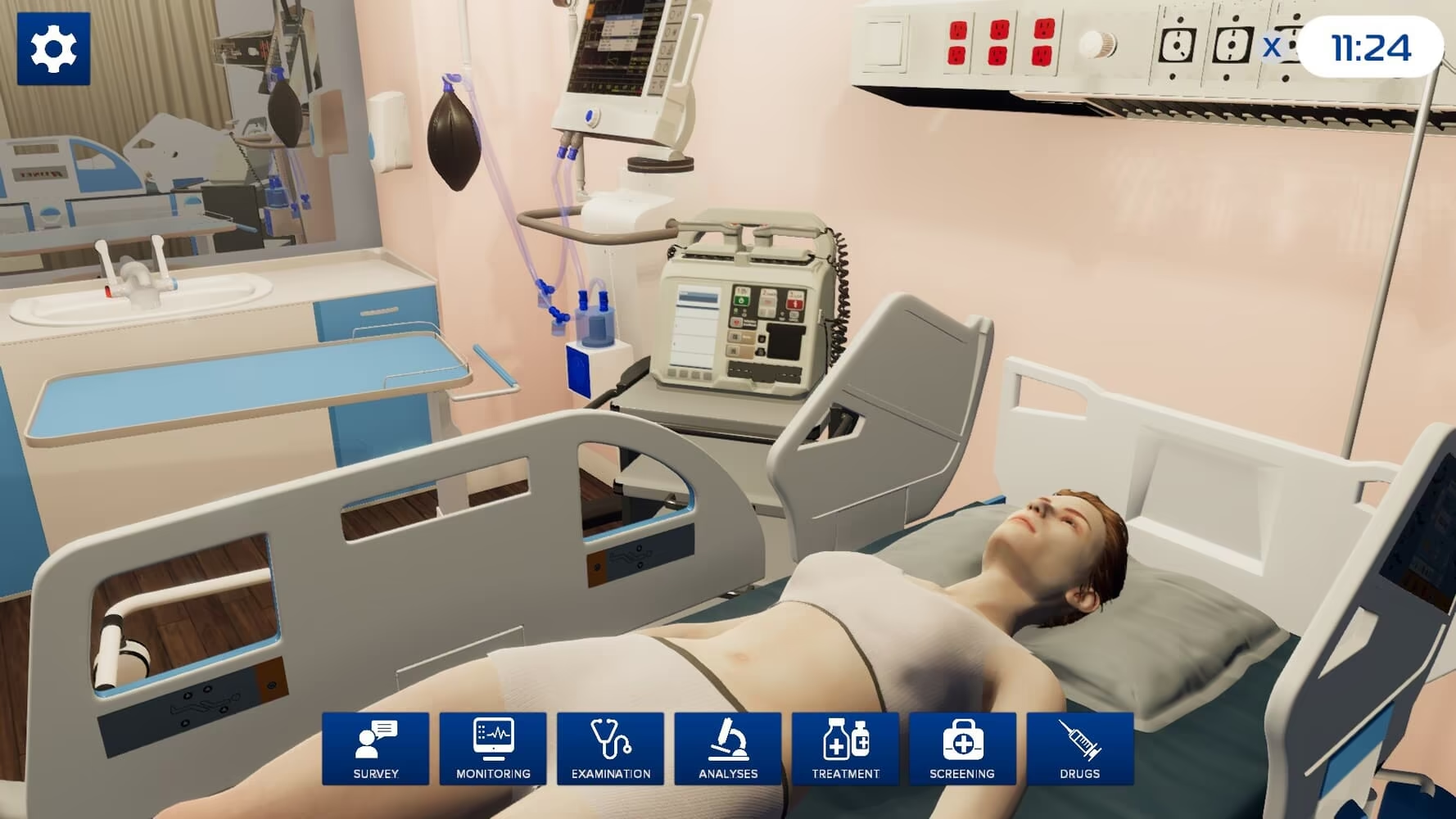
Modern healthcare centers rely on sophisticated simulation solutions to mitigate risk and optimize financial performance. By deploying realistic adult and pediatric platforms like Leonardo and Arthur, institutions empower clinicians to master critical intensive care and emergency procedures without clinical risk. Embedded sensor systems in each simulator provide immediate feedback, ensuring flawless procedural execution that lowers clinical cost.
What Role Do Specialized Task Trainers Play in Maximize Program Value?
Targeted task trainers provide an efficient, highly cost-effective pathway for clinicians to master intricate diagnostic and surgical procedures. Specialized tools such as SonoVision for ultrasound diagnostics and AngioVision for endovascular interventions allow trainees to refine their psychomotor skills repeatedly. This focused simulation practice minimizes equipment waste in actual clinical settings and improves first-attempt procedural success rates.
How Do Long-Term Operational Benefits Maximize Institutional Profitability?
The financial yield of immersive clinical simulation extends far beyond immediate error reduction. Over a multi-year horizon, comprehensive training ecosystems drive substantial operational efficiencies by standardizing clinical protocols, reducing staff turnover through enhanced professional confidence, and streamlining onboarding pipelines for newly hired healthcare professionals.
- Accelerated Onboarding: Newly recruited nurses and resident physicians reach independent clinical competency significantly faster through standardized simulation scenario practice.
- Retention and Satisfaction: Comprehensive simulation support boosts clinical confidence, mitigating burnout and reducing costly staff turnover rates.
- Interprofessional Collaboration: Multi-disciplinary team training breaks down communication silos, directly preventing clinical mishaps in high-stakes emergency environments.
How Can Health Systems Future-Proof Their Simulation Investments?
To maintain a strong ROI over time, healthcare institutions must select simulation technologies designed for long-term operational sustainability. Hidden total cost of ownership factors — such as mandatory software licenses, expensive service contracts, and rapid hardware obsolescence — can quickly erode the net financial gains of an educational program if not carefully managed.
What Is the Financial Impact of Lifetime Software Updates on Total Cost?
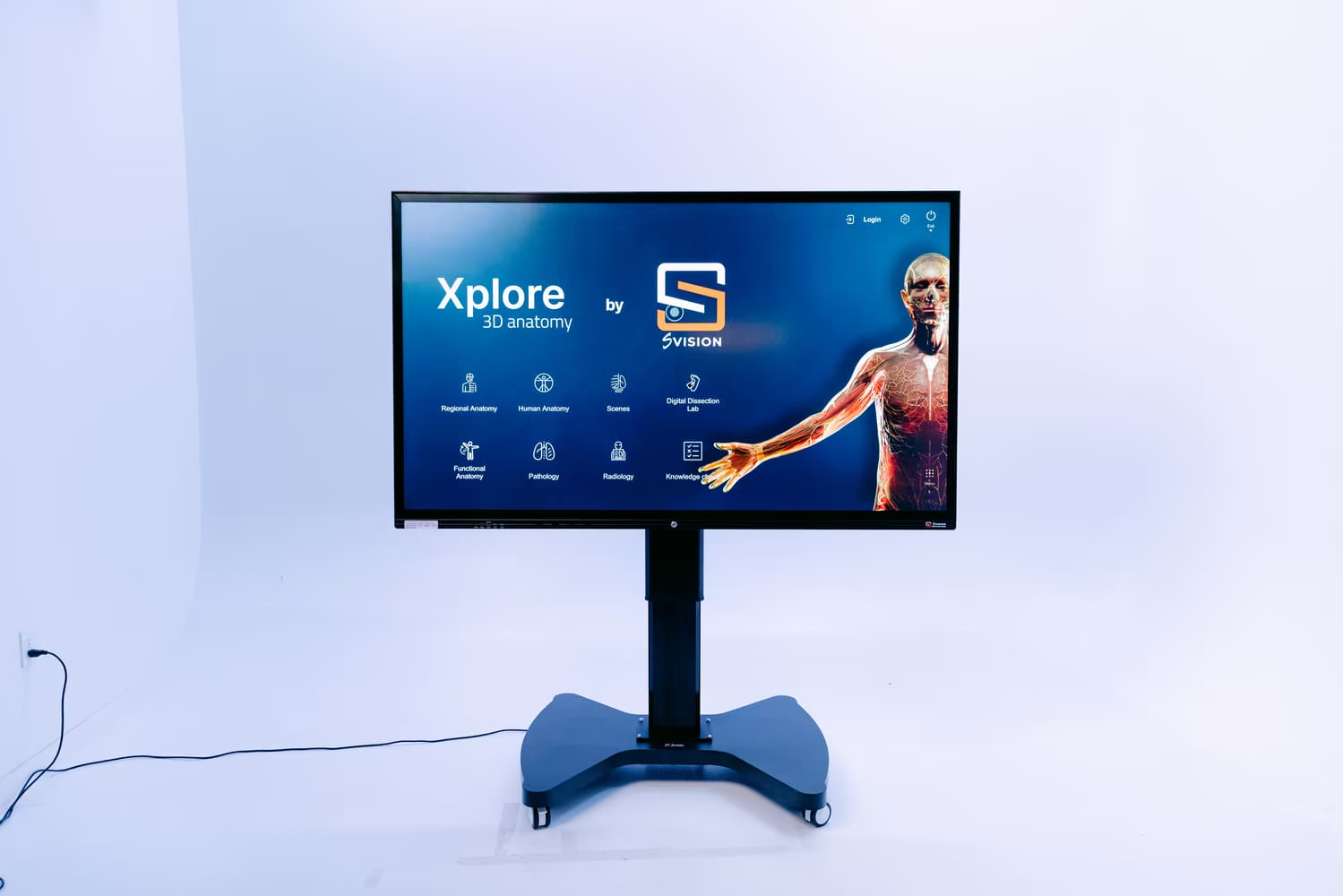
A critical factor in maximizing the long-term ROI of a training center is mitigating ongoing operational overhead. Organizations that leverage platforms offering lifetime software updates without recurring licensing fees protect their simulator investments from depreciation. Furthermore, eliminating annual subscription expenses ensures that educational facilities remain equipped with cutting-edge clinical scenarios while maintaining predictable operational budgets.
FAQ
How soon can a hospital expect to see a positive financial return from a simulator?
Most healthcare facilities begin observing a positive ROI within eighteen to twenty-four months of simulator implementation. Immediate savings typically manifest through reduced onboarding times for new clinical staff and a documented decrease in procedural complications, such as catheter-related bloodstream infections, which directly lower inpatient care costs.
What are the main financial risks when investing in clinical training technology?
The primary financial risk stems from underutilization and unexpected operational overhead. To avoid fiscal strain and maintain high ROI, institutions must account for total cost of ownership, including annual maintenance, faculty development, and proprietary licensing fees. Selecting adaptable simulation platforms with transparent, predictable operational costs is essential for safeguarding long-term profitability.
How does scenario-based team training influence hospital malpractice premiums?
Scenario-based multidisciplinary simulation team training directly targets communication breakdowns, which are the root cause of a significant percentage of sentinel events. By systematically improving team dynamics and clinical decision-making in critical care, hospitals can demonstrate lowered clinical risk profiles, frequently negotiating reduced malpractice insurance premiums with underwriters.
What is the most effective way to present training value to executive boards?
To secure executive approval and prove ROI, program directors must present a balanced scorecard linking simulation metrics directly to strategic hospital goals. Combining quantitative financial data — such as net cost avoidance from reduced litigation and faster staff time-to-competency — with qualitative improvements in clinical retention creates a compelling business case for ongoing simulator investment.
How does high-fidelity simulation impact long-term healthcare litigation and cost?
Immersive simulation training significantly mitigates clinical risk by enabling interprofessional teams to master complex procedures in a zero-risk environment. By preventing adverse patient events and diagnostic errors, a hospital simulator directly reduces costly malpractice claims and shortens hospital lengths of stay. Consequently, institutions achieve substantial long-term ROI while elevating overall clinical quality and safeguarding institutional value.
Immerse yourself in a demo to see how MedVision transforms traditional learning into an engaging, interactive experience



Subscribe for the Latest News!