

Simulation Training Protocols Medical: Standardizing Clinical Excellence
The landscape of modern healthcare education has been revolutionized by experiential learning. Central to this pedagogical shift is the meticulous development and execution of simulation training protocols medical. In high-stakes clinical environments, relying solely on traditional didactic lectures or opportunistic bedside observation is no longer sufficient. To guarantee maximum patient safety, hospitals and universities must adopt rigorous simulation frameworks. These standardized protocols ensure that every medical professional undergoes identical, high-quality training before managing critical emergencies on live patients.
The Foundation of Clinical Simulation
Effective medical simulation is not simply about placing a student in a room with a computerized mannequin. It is a highly structured educational process governed by strict training guidelines. A robust simulation program requires educators to design scenarios that perfectly mirror real-world physiological crises. By utilizing advanced simulation, clinical directors can expose learners to rare, life-threatening events - such as malignant hyperthermia or a massive pulmonary embolism - without risking human lives. The ultimate goal of this targeted training is to transform chaotic, high-stress situations into manageable, algorithm-driven clinical responses.
Key Phases of Simulation Training Protocols Medical
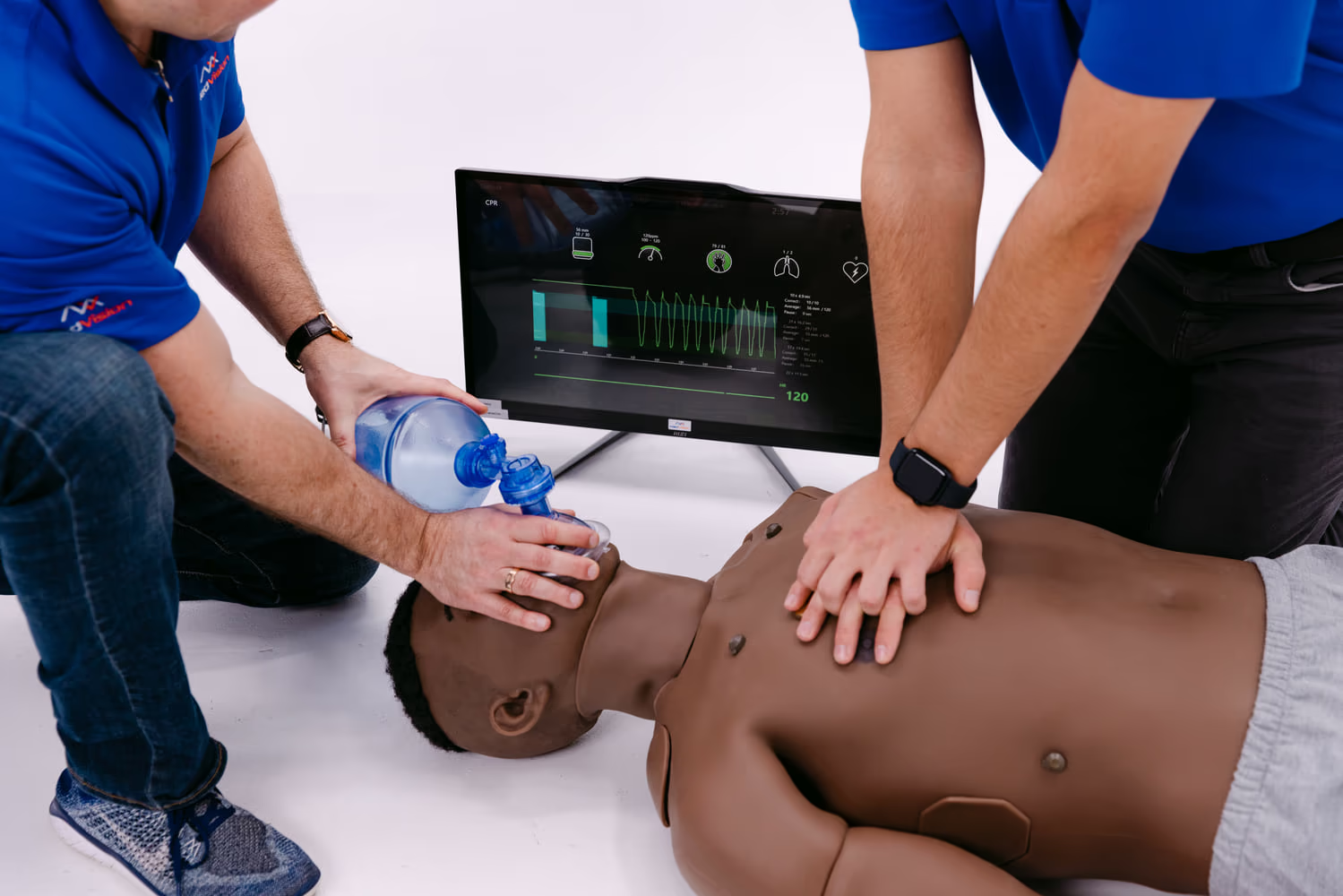
To achieve measurable improvements in clinical competency, every simulation session must follow a standardized protocol. These protocols dictate the entire operational flow of the training exercise, dividing it into three highly distinct, critical phases.
1. The Pre-Briefing Phase
The pre-briefing is arguably the most crucial psychological component of any simulation. During this initial training stage, the instructor establishes a "safe container" for experiential learning. Medical students and seasoned practitioners alike must explicitly understand that the simulation is an opportunity to make mistakes without professional judgment. A standard protocol dictates that educators thoroughly explain the technical capabilities of the simulation equipment, outline the specific learning objectives, and establish the clinical roles of each participant. Proper pre-briefing drastically reduces defensive behavior and maximizes cognitive engagement during the subsequent training.
2. The Scenario Execution
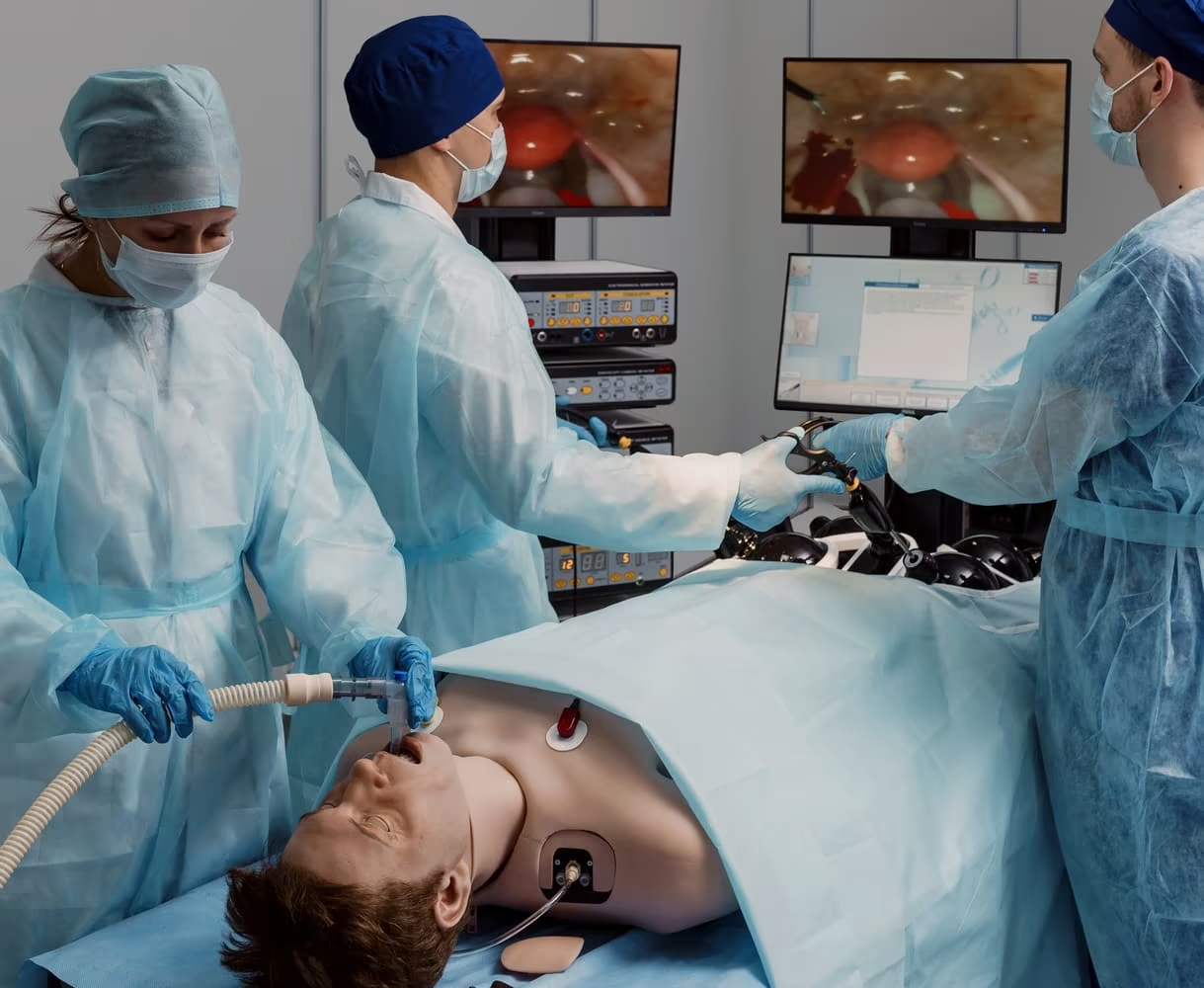
Once the pre-briefing concludes, the active simulation begins. During this phase, the training protocol strictly requires instructors to remain in character and allow the medical team to function independently. If a learner administers the incorrect medication during the simulation, the virtual patient's vitals must crash realistically to reflect the error. The training environment must physically and emotionally replicate a genuine clinical ward. Advanced simulation software continuously tracks every intervention, providing objective, time-stamped data that will later be used to evaluate the team's clinical performance.
3. The Debriefing Phase
The actual simulation is merely the catalyst; the most profound cognitive learning occurs entirely during the debriefing. According to established simulation training protocols medical, the debriefing must be a highly structured, psychologically safe, and reflective conversation. The instructor uses the recorded training data to guide the learners through a deep analysis of their critical thinking and teamwork. Why was the airway intervention delayed during the simulation? Was it a fundamental lack of medical knowledge, or a catastrophic breakdown in team communication? This reflective training process securely cements the clinical concepts into the practitioner's long-term memory.
Instructor Training and Certification
The ultimate success of any clinical simulation program rests entirely on the competence of its educators. Therefore, specialized instructor training is absolutely vital. Teaching in a high-fidelity simulation laboratory is fundamentally different from delivering a traditional medical lecture. Instructors must master how to manipulate complex simulation software, portray standardized patients (actors) convincingly, and facilitate structured debriefings.
Many top-tier medical institutions now mandate that educators complete formal simulation instructor courses. These advanced training programs teach clinical faculty how to design scientifically valid scenarios, seamlessly integrate high-fidelity manikins, and measure student cognitive load. By standardizing this higher-level instructor training, hospitals ensure that the delivery of their simulation curriculum remains consistently excellent across all medical departments.

Mobile and In-Situ Simulation Training
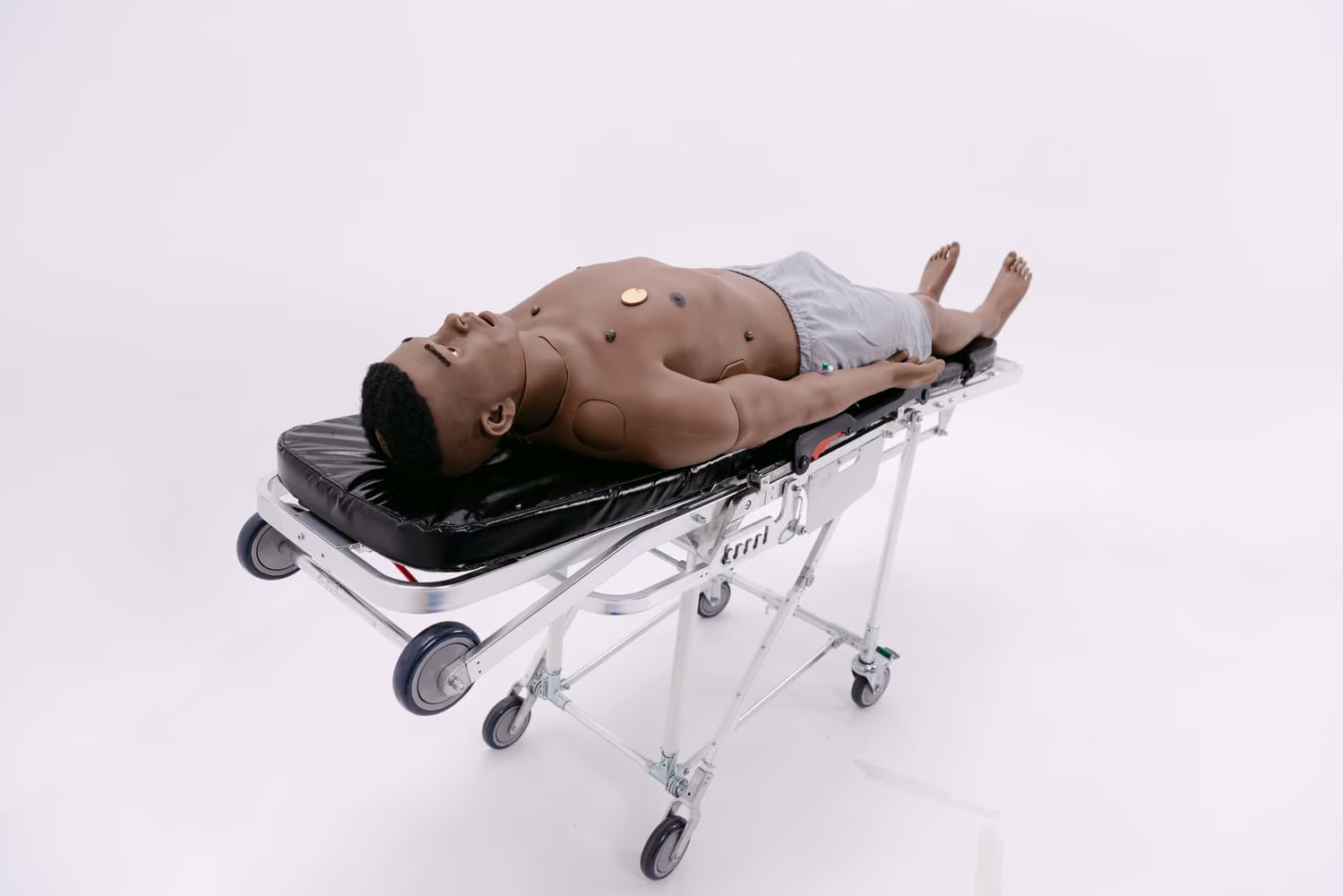
Traditionally, training occurred exclusively within the isolated walls of a dedicated simulation center. However, modern simulation training protocols medical increasingly emphasize the immense importance of "in-situ" training. In-situ simulation involves bringing the physical manikins and digital monitors directly into the actual hospital ward, such as an active emergency room or a bustling pediatric intensive care unit.
This specific type of simulation provides unparalleled systemic benefits. It allows clinical teams to practice in their authentic work environment using their own physical equipment. During an in-situ training exercise, a trauma team might discover that a critical defibrillator is stored too far from the resuscitation bay, or that a specific life-saving medication is consistently missing from the crash cart. Consequently, this mobile simulation methodology acts as a powerful diagnostic tool for the hospital's systemic workflow, directly improving global patient safety beyond just individual medical training.
Crisis Resource Management (CRM) in Healthcare
Modern simulation training protocols medical strictly mandate that human factors are prioritized just as heavily as technical clinical algorithms. A monumental paradigm shift in healthcare education was the direct adaptation of Crisis Resource Management (CRM) from the commercial aviation industry. In a chaotic medical crisis, isolated technical proficiency is fundamentally insufficient to save a patient. When an interdisciplinary team engages in a highly complex simulation, the educational objective frequently revolves entirely around core CRM principles: effective leadership, dynamic followership, closed-loop communication, and broad situational awareness.
Through rigorous, repetitive training, participants learn to allocate cognitive resources efficiently under immense psychological pressure. The immersive environment acts as a completely objective mirror, explicitly revealing how sudden cognitive overload can actively cause critical communication breakdowns between surgeons, nurses, and anesthesiologists. Consequently, CRM-focused instruction drastically reduces preventable medical errors and vastly improves collective team performance across the entire hospital system.
Objective Standardized Clinical Assessments
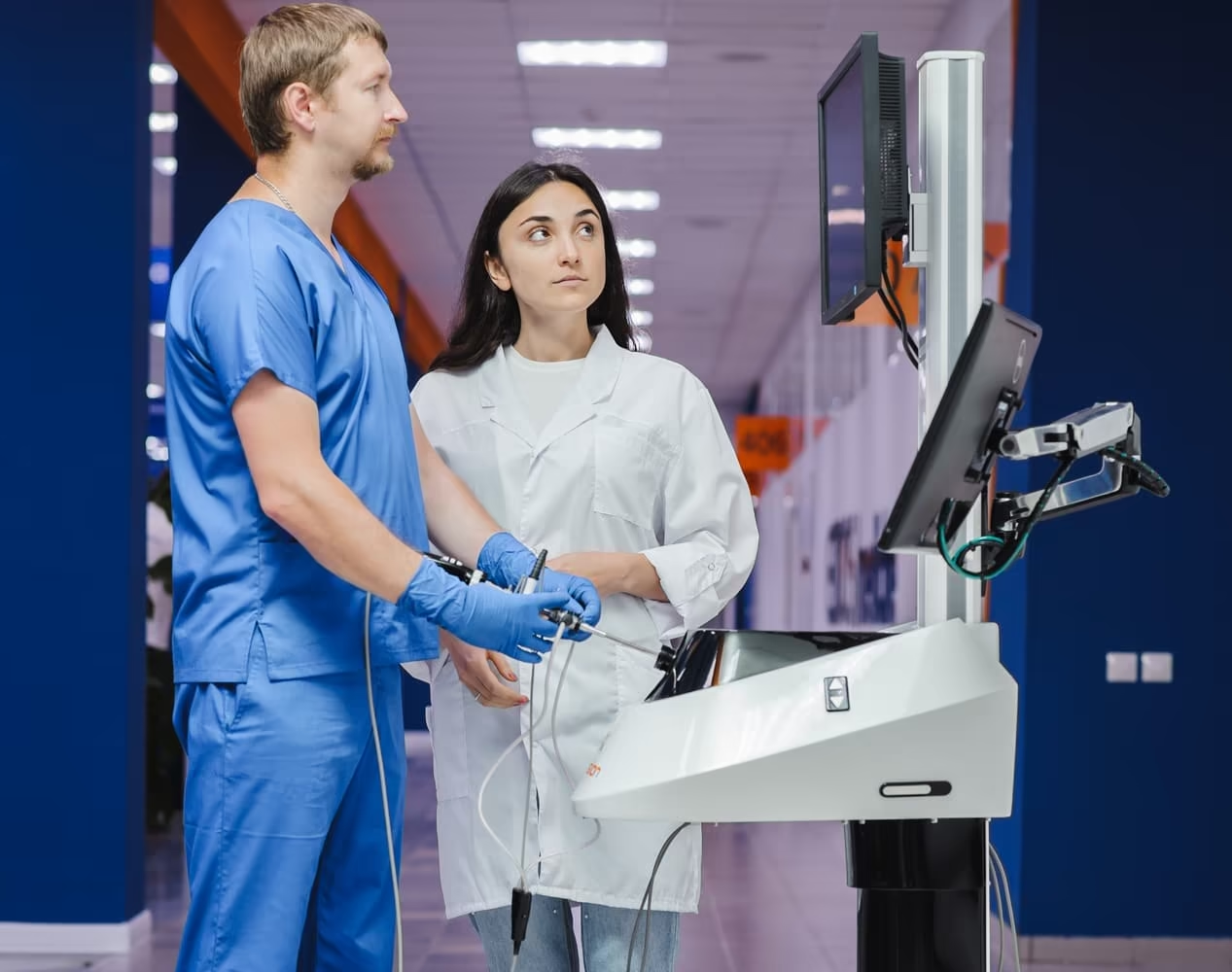
Beyond formative, low-stakes education, clinical assessment is heavily utilized globally for high-stakes summative credentialing and licensing. Standardized testing methodologies - such as the Objective Structured Clinical Examination (OSCE) and the Fundamentals of Laparoscopic Surgery (FLS) curriculum - rely exclusively on uncompromising simulation training protocols medical.
During an OSCE, a candidate actively rotates through multiple isolated stations, interacting methodically with professional standardized patients or physical task trainers. Because the grading rubrics are perfectly standardized, every single candidate faces the exact same objective clinical challenge within the simulation. This protocol-driven, evidence-based approach to evaluation completely eliminates human examiner bias. It provides undeniable, mathematically validated proof that a professional possesses the fundamental cognitive and psychomotor baseline required to safely practice independent medicine.
Comparative Analysis: Center-Based vs. In-Situ Modalities
To fully understand the scope of these educational methodologies, it is essential to compare the two primary modalities of modern experiential training.
Economic Viability and Institutional ROI
Implementing comprehensive simulation training protocols medical demands a highly substantial, ongoing financial commitment from any academic or clinical institution. Purchasing high-fidelity digital manikins, maintaining physical hardware, and hiring dedicated, certified personnel requires massive capital expenditure. However, the long-term economic Return on Investment (ROI) of this simulation infrastructure is unequivocally and overwhelmingly positive.
Rigorous, protocol-driven training actively mitigates severe institutional medical liability. By identifying latent workflow flaws during an in-situ simulation exercise, or by rectifying a surgical resident's flawed suturing technique during a routine training module, hospitals actively and preemptively prevent catastrophic malpractice events. The immense financial resources and legal costs saved by avoiding just one single major clinical error effortlessly justify a decade of operational and maintenance costs for an entire state-of-the-art laboratory.
The Future of Experiential Education: AI and Virtual Reality
As global computing technology rapidly advances, the immediate future of medical simulation will be heavily augmented by the integration of Artificial Intelligence (AI) and fully immersive Virtual Reality (VR). Next-generation protocols will utilize advanced AI algorithms to autonomously manipulate the simulation environment in real-time. The digital software will dynamically adjust the virtual patient's physiological deterioration based entirely on the student's immediate clinical decisions.
This intelligent, highly responsive training architecture will allow for completely hyper-personalized learning paths. It ensures that the scenario is never too easy, nor impossibly difficult, perfectly maintaining the optimal cognitive load required for maximum long-term educational retention. The continuous evolution of these immersive technologies guarantees that medical professionals will always possess the sharpest possible clinical skills.
Conclusion
In summary, the widespread, uncompromising adoption of strict simulation training protocols medical represents the most significant educational advancement in modern healthcare history. Relying on outdated, opportunistic bedside teaching is no longer ethically or practically viable. By fully embracing high-fidelity simulation, medical universities and teaching hospitals create a fiercely protective, competency-based learning ecosystem.
Through relentlessly standardized training, clinical educators guarantee that every single practitioner crossing the threshold of a live hospital ward already possesses the refined psychomotor skills, profound anatomical knowledge, and resilient communication strategies required to succeed. Ultimately, investing heavily in a rigorous objective simulation curriculum is the absolute greatest commitment an institution can make to ensuring flawless, equitable, and life-saving patient care.
References
- Aggarwal, R., Mytton, O. T., Derbrew, M., Hananel, D., Heydenburg, M., Issenberg, B., ... & Darzi, A. (2010). Training and simulation for patient safety. Quality and Safety in Health Care, 19(suppl 2), i34-i43.
- Gaba, D. M. (2004). The future vision of simulation in health care. Quality and Safety in Health Care, 13(suppl 1), i2-i10.
- McGaghie, W. C., Issenberg, S. B., Petrusa, E. R., & Scalese, R. J. (2010). A critical review of simulation-based medical education research: 2003–2009. Medical Education, 44(1), 50-63.
- Ziv, A., Ben-David, S., & Ziv, M. (2005). Simulation based medical education: an opportunity to learn from errors. Medical Teacher, 27(3), 193-199.
FAQ
What are simulation training protocols medical?
They are strictly structured educational guidelines that dictate exactly how clinical scenarios are designed, executed, and debriefed. These simulation training protocols medical ensure that all training is highly standardized, psychologically safe, and strictly focused on measurable clinical competency outcomes.
How does an immersive simulation improve Crisis Resource Management?
It allows multidisciplinary teams to practice closed-loop communication, leadership, and delegation under intense, replicated pressure. This educational training exposes cognitive breakdowns safely, ensuring the medical team acts cohesively and efficiently during a real clinical emergency.
Why are standardized patients included in these protocols?
Standardized patients (highly trained professional actors) provide essential emotional realism for teaching empathetic communication. They form a core part of the simulation, allowing medical students to practice delivering devastating bad news or taking complex psychiatric histories in a highly controlled, risk-free training environment.
Immerse yourself in a demo to see how MedVision transforms traditional learning into an engaging, interactive experience

Subscribe for the Latest News!