
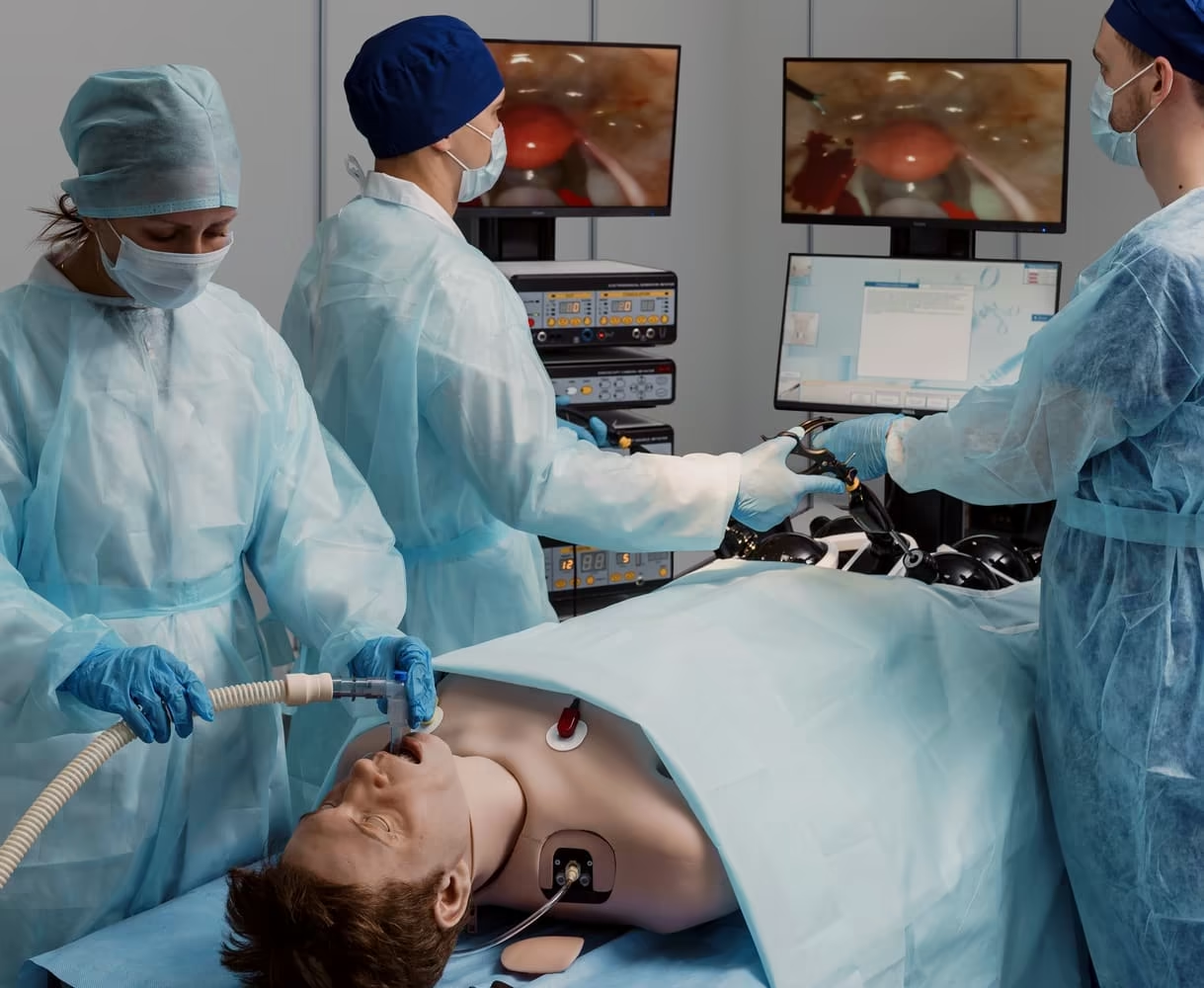
Laparoscopy Box Trainer vs Simulator: Navigating Surgical Education
The development of minimally invasive surgical techniques has fundamentally altered the landscape of modern operative medicine. However, the unique mechanical demands of laparoscopic surgery - specifically the fulcrum effect, the loss of direct three-dimensional vision, and the significantly altered tactile feedback - create an exceptionally steep learning curve. To ensure absolute patient safety, surgical students and medical residents must acquire complete mastery over these complex psychomotor tasks before ever entering a live operating room. In modern academic teaching hospitals, the ultimate comparison for acquiring these foundational competencies involves two primary modalities: the traditional physical laparoscopic training box and the highly advanced virtual reality laparoscopic simulator.
While both of these educational tools aim to significantly enhance clinical performance and surgical dexterity, they utilize vastly different pedagogical philosophies and underlying technologies. Understanding the specific advantages, economic realities, and limitations of each system is essential for curriculum directors seeking to optimize surgical practice.
The Fundamentals of the Laparoscopic Training Box
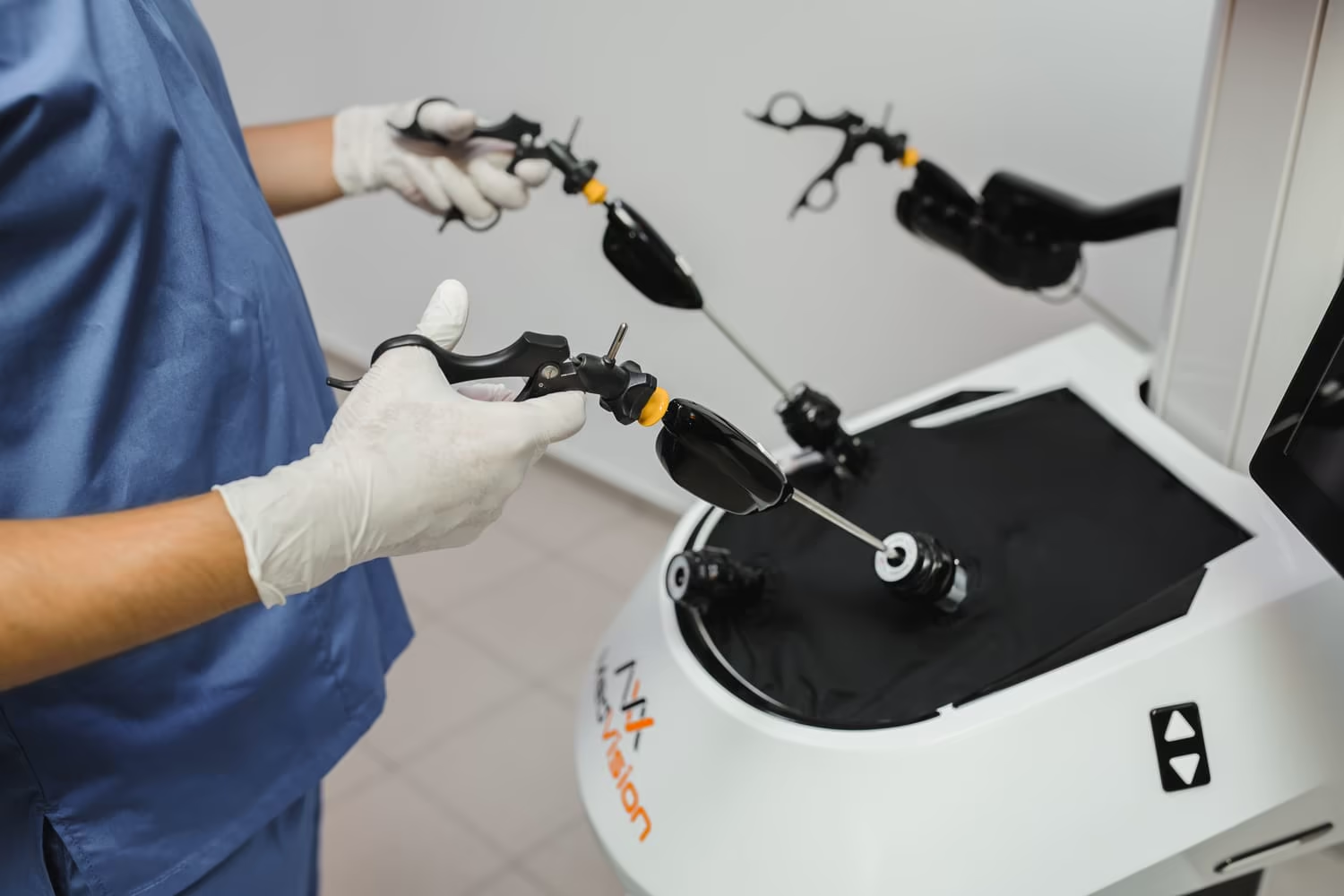
The laparoscopic training box (frequently referred to as a pelvic trainer or a video trainer) is a relatively simple, physical enclosure explicitly designed to mimic the human abdominal cavity. This physical box typically features an opaque synthetic dome with strategically placed trocars, allowing the trainee to insert genuine, clinical-grade surgical instruments and a physical endoscope. Inside the box, surgical residents manipulate physical objects - such as synthetic suturing pads, specialized pegboards, or even prepared animal tissue (ex vivo models) - while watching their intricate movements on an external 2D monitor.

Tactile Authenticity and Basic Skill Acquisition
The absolute primary advantage of the physical box trainer is its undeniable tactile authenticity. Because the user is wielding actual steel instruments against genuine physical resistance, the haptic (touch) feedback is perfectly realistic. This undeniable physical reality makes the box an exceptionally reasonable and highly effective alternative for mastering basic foundational skills.
When a resident utilizes a laparoscopic training box, they can engage in repetitive, deliberate practice of core techniques such as peg transfer, precision pattern cutting, and intracorporeal knot tying. Furthermore, the physical box is incredibly cost-effective, highly durable, and completely immune to software glitches. A surgical department can easily purchase and deploy a dozen physical box systems for the price of a single advanced digital simulator. This accessibility dramatically increases the sheer volume of hands-on practice available to residents, allowing them to log hundreds of hours refining their basic hand-eye coordination before advancing to more complex procedures.
The Advanced Laparoscopic Simulator
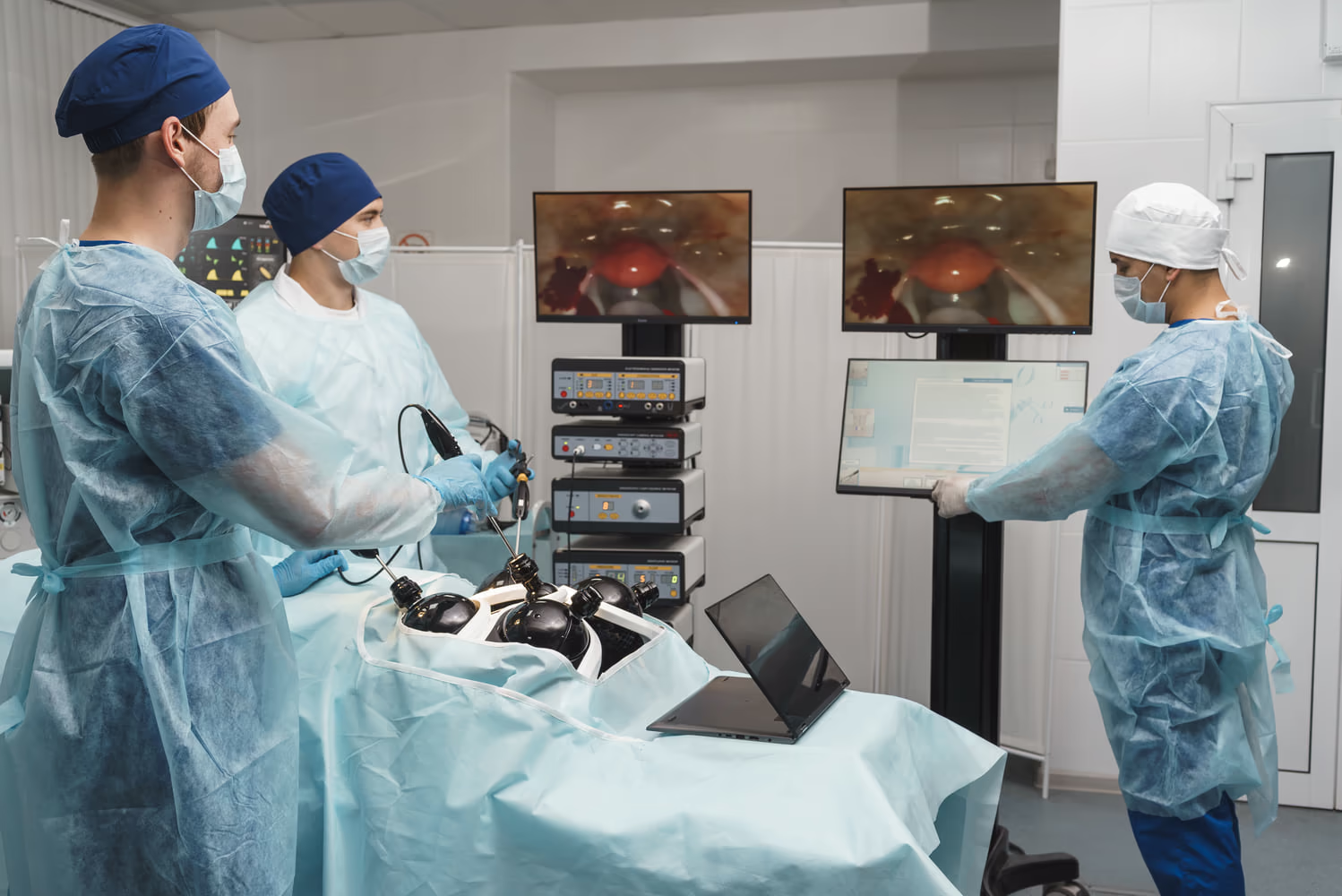
In stark contrast to the physical enclosure, a high-fidelity virtual reality laparoscopic simulator represents the absolute pinnacle of digital medical education. Instead of utilizing a simple box, this digital simulator utilizes a high-powered algorithmic computing system paired with specialized mechanical hardware handles. When a surgical trainee logs into a premium laparoscopic simulator, they are instantly immersed in a completely virtual, anatomically precise, dynamic 3D surgical environment.
Scenario-Based Training and Objective Assessment
The defining, revolutionary feature of a modern laparoscopic simulator is its capacity to recreate highly complex, full-procedure anatomical scenarios. A digital simulator can seamlessly guide a trainee through a complete laparoscopic cholecystectomy, a complex appendectomy, or a delicate inguinal hernia repair. If a resident makes a catastrophic error - such as accidentally lacerating a virtual cystic artery during a session on the laparoscopic simulator - the digital screen accurately simulates rapid hemorrhage. This forces the trainee to manage a critical, high-stress complication safely, an educational experience that simply cannot be replicated inside a standard physical box.
Furthermore, while a physical box requires a senior attending surgeon to stand nearby and subjectively visually grade a trainee's technique, a digital simulator automatically provides completely objective, metric-based assessment. The computing system inside the laparoscopic simulator meticulously tracks every single micro-movement. The simulator mathematically records the exact path length of the instruments, the economy of motion, the total time taken, and the precise angles of the virtual tissue traction. This data-driven approach to evaluating surgical performance completely eliminates human grading bias, ensuring that every resident meets a strict, mathematical standard of clinical excellence.
However, achieving realistic haptic feedback on a digital laparoscopic simulator requires immensely expensive, ultra-high-frequency mechanical servo motors. Consequently, these advanced systems represent a massive financial investment, meaning most institutions can only afford one or two units, potentially limiting the total hours of accessible practice for the surgical cohort.
The FLS Paradigm and Standardized Surgical Assessment
To fully contextualize the ongoing debate surrounding the laparoscopy box trainer vs simulator, one must examine the industry standard for surgical credentialing: the Fundamentals of Laparoscopic Surgery (FLS) program. Created by the Society of American Gastrointestinal and Endoscopic Surgeons (SAGES), the FLS curriculum dictates the absolute baseline of cognitive and psychomotor development required to safely operate on human patients.
Interestingly, to pass the rigorous FLS manual skills examination, students and surgical residents must demonstrate their proficiency explicitly within a physical laparoscopic training box. The examination requires trainees to perform highly specific tasks, such as precise pattern cutting, ligating a loop, and completing an intracorporeal knot, all using authentic surgical instruments inside the physical box. Because FLS certification relies on the box, the physical laparoscopic training box remains an absolutely indispensable, foundational tool in every major teaching hospital. While an advanced digital simulator can excellently track performance metrics, the physical box remains the ultimate, internationally recognized testing ground for basic laparoscopic dexterity.
However, extensive academic research provides a compelling comparison regarding skill transferability. Multiple peer-reviewed studies published in major surgical journals have proven that psychomotor skills acquired on a high-fidelity laparoscopic simulator transfer directly to improved performance inside a physical box, and more importantly, translate to superior clinical outcomes in the actual live operating room.
Comprehensive Comparative Analysis
To determine the most reasonable and effective pedagogical approach, academic directors frequently rely on a direct, side-by-side comparison of both modalities. Below is a detailed breakdown illustrating how each system uniquely contributes to modern surgical education and practice.
Economic Viability and the Hybrid Curriculum
When hospital administrators and surgical residency directors confront the laparoscopy box trainer vs simulator dilemma, they quickly realize that treating these systems as mutually exclusive is a fundamental pedagogical error. The most effective, evidence-based alternative to choosing just one system is the strategic implementation of a robust, hybrid surgical curriculum.
In a highly optimized hybrid learning environment, early-year students and junior residents initially focus their practice entirely on the affordable laparoscopic training box. Inside this physical box, they dedicate countless hours to mastering basic camera navigation, eliminating their non-dominant hand tremors, and overcoming the counter-intuitive laparoscopic fulcrum effect using real steel instruments. The box acts as the perfect, low-cost gatekeeper for foundational psychomotor development.
Once the surgical trainee has achieved a mathematically verified baseline of proficiency in the physical box, they graduate to the advanced digital laparoscopic simulator. Because they already know how to hold the instruments and tie a knot, they do not waste expensive digital simulator time on rudimentary tasks. Instead, they utilize the laparoscopic simulator exclusively for high-level cognitive development: executing full laparoscopic cholecystectomies, managing virtual hemorrhages, and practicing complex decision-making. This hybrid approach ensures that the highly expensive laparoscopic simulator is utilized precisely for what it was engineered to do - advanced procedural simulation - while the durable, reliable physical box handles the massive volume of repetitive basic skills practice.
Conclusion
Ultimately, the definitive conclusion to the laparoscopy box trainer vs simulator debate is that both systems are absolutely critical, highly synergistic pillars of modern surgical education. Neither system can entirely replace the unique educational benefits of the other. The traditional laparoscopic training box provides the unparalleled, authentic tactile feedback required to safely master foundational instrument handling and physical suturing. Conversely, the high-fidelity laparoscopic simulator provides the sophisticated, metric-driven, anatomically immersive environment necessary to perfect full-procedure cognitive strategies and crisis management. By seamlessly integrating both the physical box and the digital simulator into a cohesive, competency-based curriculum, medical institutions ensure their graduating surgeons achieve the absolute highest standard of flawless, life-saving laparoscopic clinical performance.
References
- Zendejas, B., Brydges, R., Wang, A. T., & Cook, D. A. (2013). Patient outcomes in simulation-based medical education: a systematic review. Journal of General Internal Medicine, 28(8), 1078-1089.
- Gallagher, A. G., Ritter, E. M., Champion, H., Higgins, G., Fried, M. P., Moses, G., ... & Satava, R. M. (2005). Virtual reality simulation for the operating room: proficiency-based training as a paradigm shift in surgical skills training. Annals of Surgery, 241(2), 364.
- Fried, G. M., Feldman, L. S., Vassiliou, M. C., Fraser, S. A., Stanbridge, D., Ghitulescu, G., & Andrew, C. G. (2004). Proving the value of simulation in laparoscopic surgery. Annals of Surgery, 240(3), 518-528.
- Korndorffer Jr, J. R., Hayes, D. J., Dunne, J. B., Sierra, R., Touchard, C. L., Hewitt, C. W., & Scott, D. J. (2005). Development and transferability of a cost-effective laparoscopic camera navigation simulator. Surgical Endoscopy, 19(2), 161-167.
FAQ
What is the core difference in the laparoscopy box trainer vs simulator comparison?
The core difference lies in technology and haptics. A laparoscopic training box is a physical enclosure where trainees use real instruments to manipulate physical objects, offering perfect tactile feedback. An advanced laparoscopic simulator is a digital computer system that uses a screen and algorithms to recreate full laparoscopic surgical procedures, offering objective tracking and virtual anatomy.
Can a digital laparoscopic simulator entirely replace the physical box?
No. While a laparoscopic simulator is incredible for procedural development and tracking performance, standard certification programs like FLS still require trainees to pass their exams utilizing a physical laparoscopic training box. The physical box is irreplaceable for mastering the authentic feel of tying real surgical knots.
Do instruments feel realistic when using a virtual laparoscopic simulator?
High-end premium versions of the laparoscopic simulator utilize highly advanced haptic force-feedback motors to mimic tissue resistance quite accurately. However, no digital simulator currently replicates the exact, raw mechanical friction and authentic physical tension that a trainee experiences when manipulating real tissues with steel tools inside a traditional physical box.
Immerse yourself in a demo to see how MedVision transforms traditional learning into an engaging, interactive experience

Subscribe for the Latest News!