

Simulation vs Bedside Teaching: Transforming Modern Medical Training
For over a century, the absolute foundational pillar of medical education has been the direct observation and treatment of live human beings. However, as the complexities of modern healthcare systems increase and ethical standards regarding patient safety become more stringent, academic teaching hospitals are experiencing a monumental pedagogical shift. Today, the most hotly debated topic among medical curriculum directors is the dynamic between two primary educational modalities: simulation vs bedside teaching.
Both of these distinct approaches serve a critical role in shaping the next generation of physicians. Traditional bedside teaching immerses learners in the organic, unpredictable reality of human illness, while advanced simulation provides a highly controlled, risk-free environment for repetitive, deliberate practice. To fully understand how to build a superior medical curriculum, educators must engage in a rigorous comparison of both modalities, acknowledging that medical students require a strategic blend of both to master their essential clinical skills.
The Legacy and Mechanics of Bedside Teaching
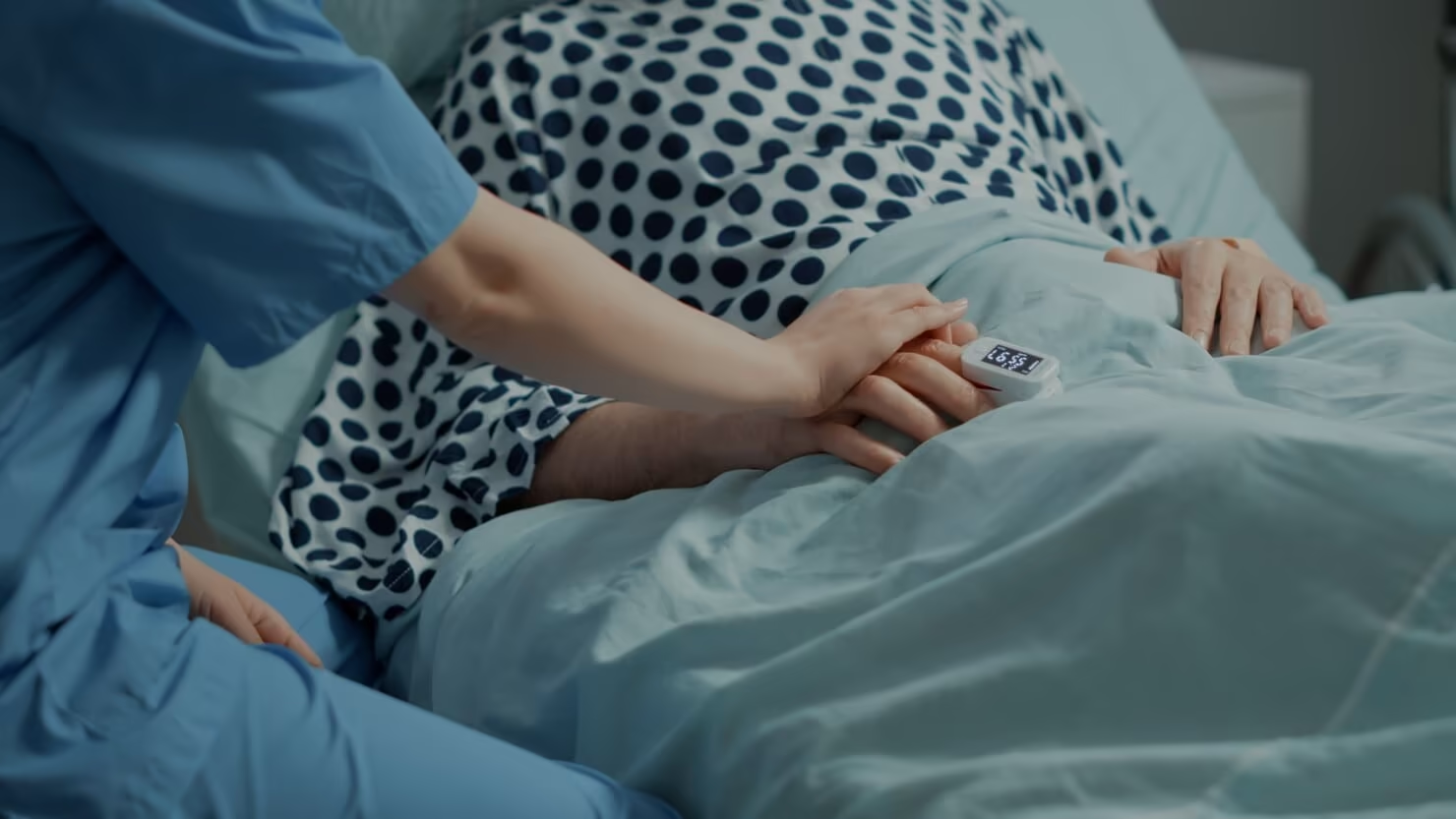
To appreciate the ongoing evolution of medical education, one must first deeply examine the historical and practical significance of bedside teaching. Popularized in the late 19th century by Sir William Osler, bedside teaching operates on the philosophy that true medicine can only be learned by directly interacting with patients on the clinical ward. In this traditional model, an attending physician leads a group of trainees to a live patient's hospital bed to conduct a physical examination, take a thorough medical history, and discuss differential diagnoses in real-time.
The unparalleled advantage of bedside teaching is its raw, unedited authenticity. When engaging in bedside teaching, students are forced to navigate the complex social and emotional dynamics of actual human beings. They learn to interpret subtle non-verbal cues, manage a patient's pain or anxiety, and develop the profound empathy required for compassionate care. Furthermore, bedside teaching exposes learners to genuine, organic physical findings - such as a true diastolic heart murmur, a palpable liver edge, or the specific sound of pulmonary crackles - that are inherently difficult to replicate artificially.
However, bedside teaching presents significant logistical and ethical challenges. The educational value of bedside teaching is entirely dependent on the opportunistic availability of specific pathologies on the ward. If a student's rotation occurs during a period where certain rare diseases are absent, they simply miss that educational opportunity. More importantly, relying strictly on bedside teaching means that novices are practicing their initial, unrefined clinical skills directly on vulnerable patients, which inherently elevates the risk of medical error and patient discomfort.
The Rise and Efficacy of Clinical Simulation
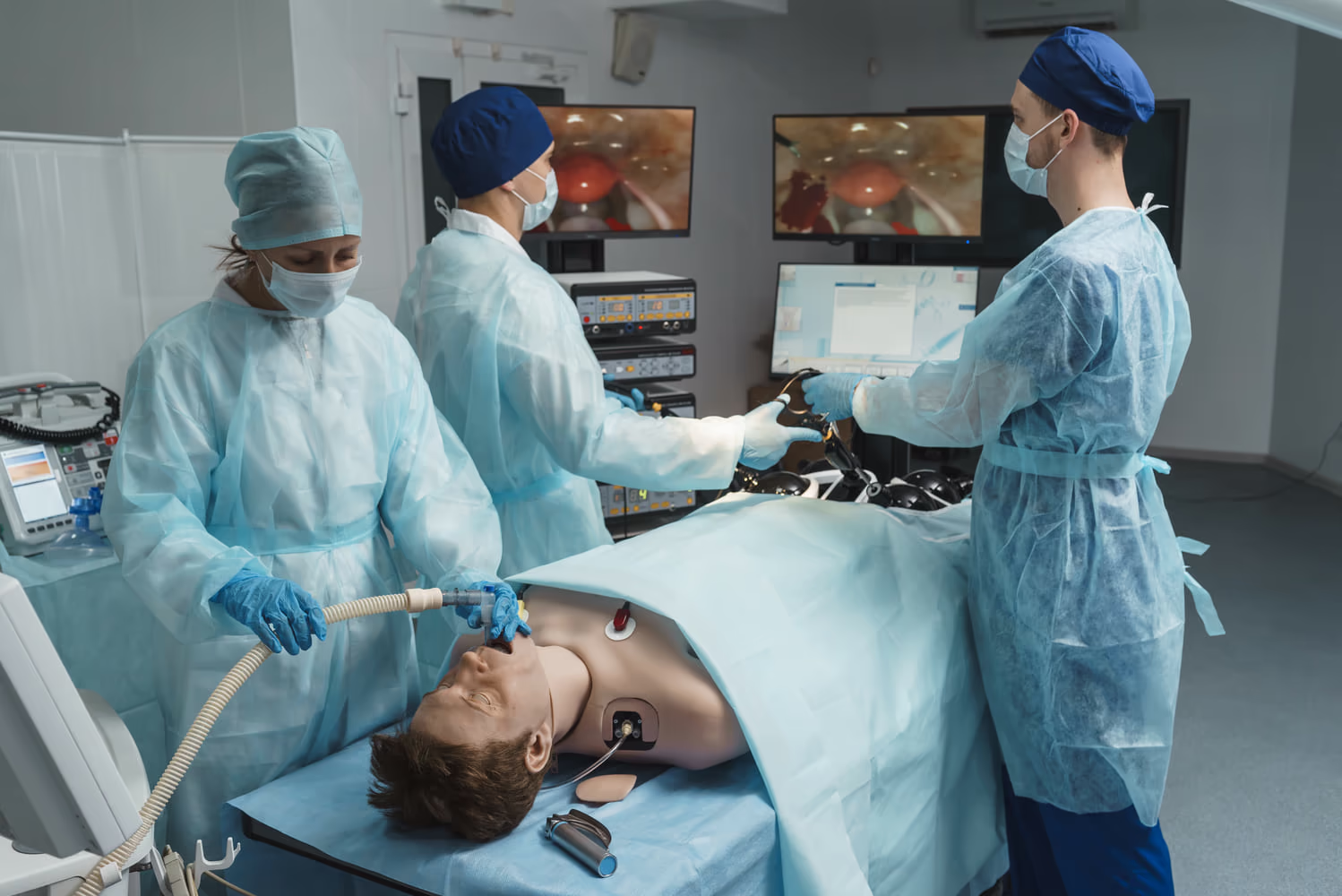
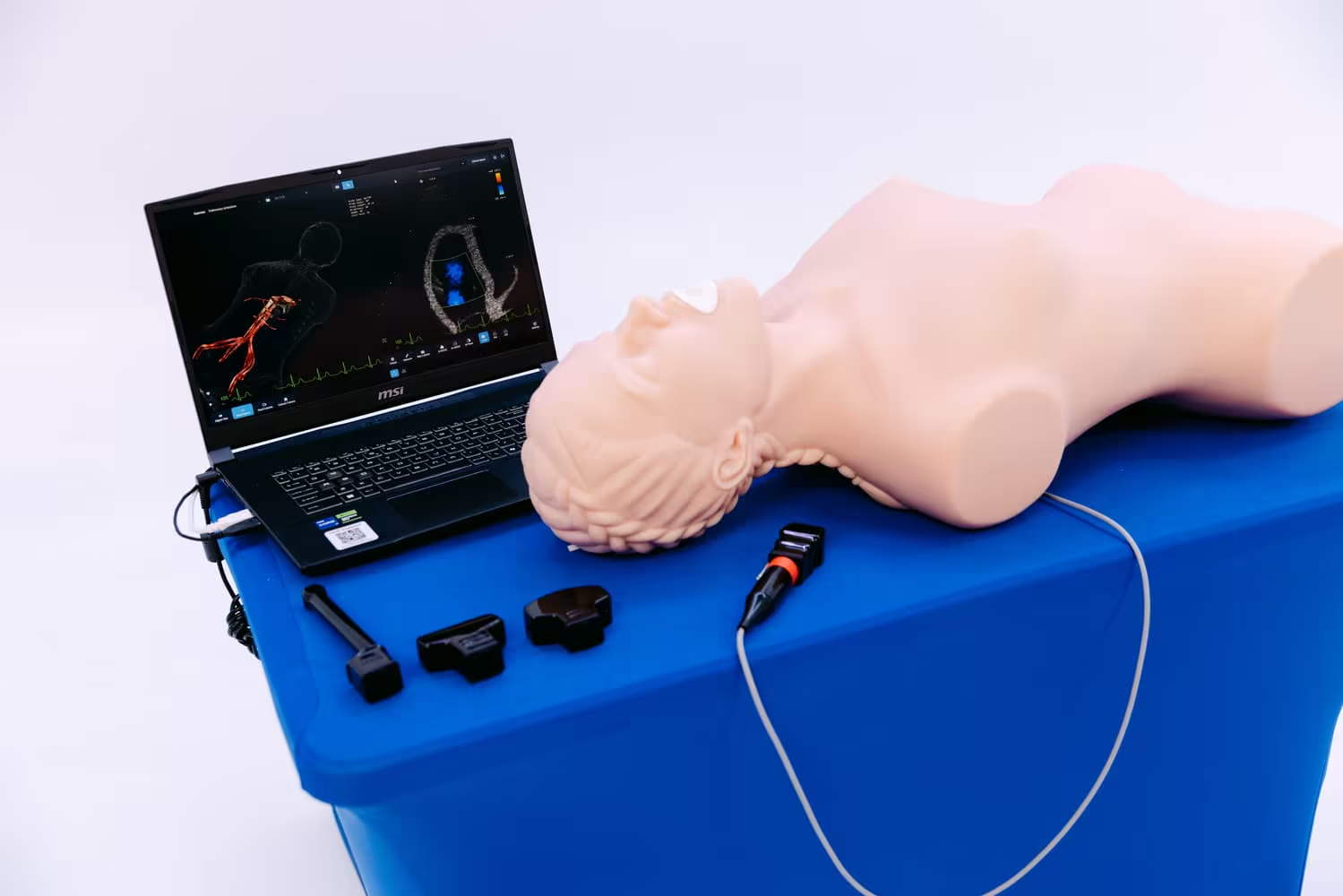
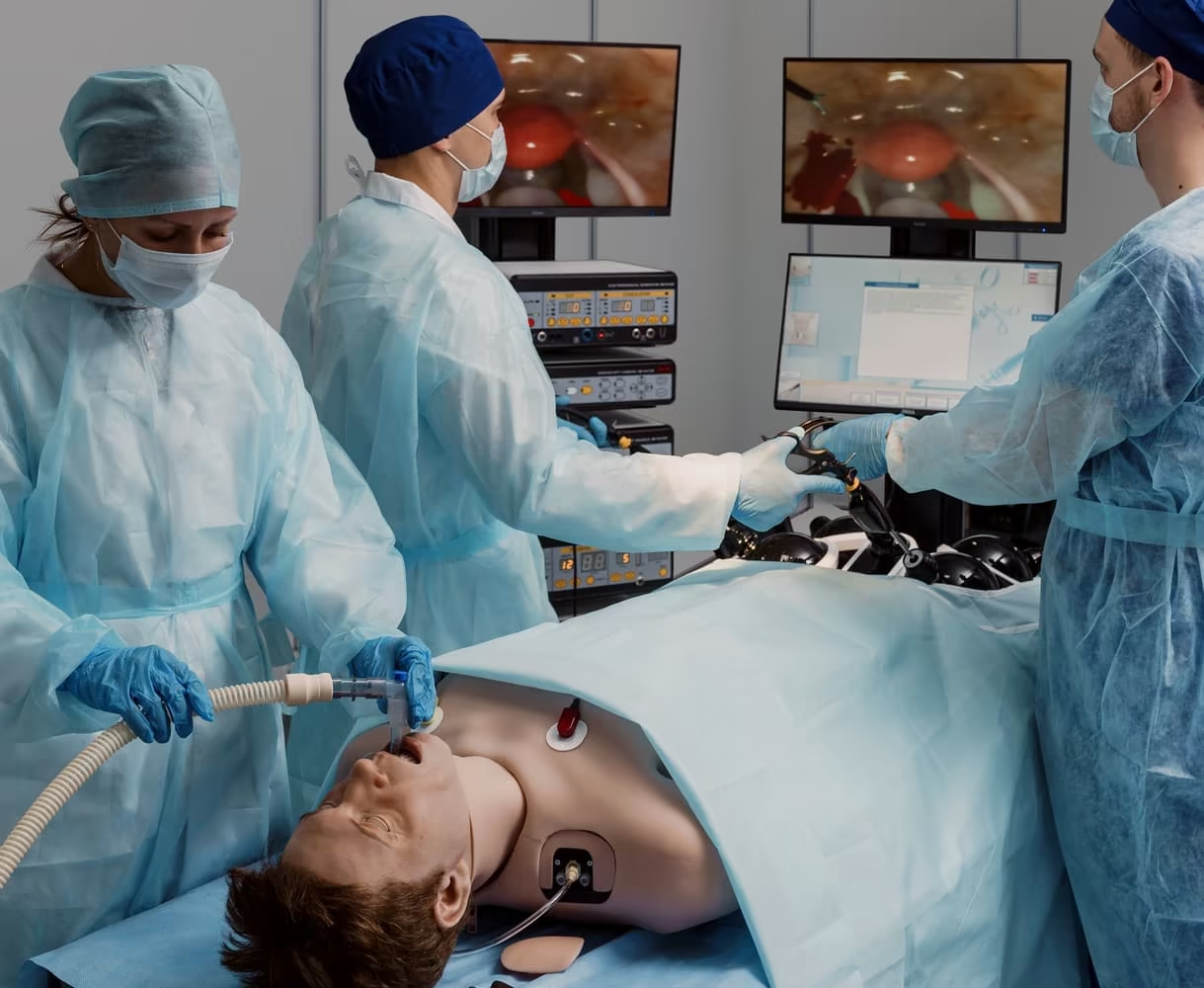
To mitigate the inherent risks associated with live patient encounters, the global medical community has heavily embraced technology-enhanced experiential learning. Simulation utilizes highly advanced physical manikins, virtual reality software, and standardized actors to recreate complex clinical scenarios in a strictly controlled laboratory environment.
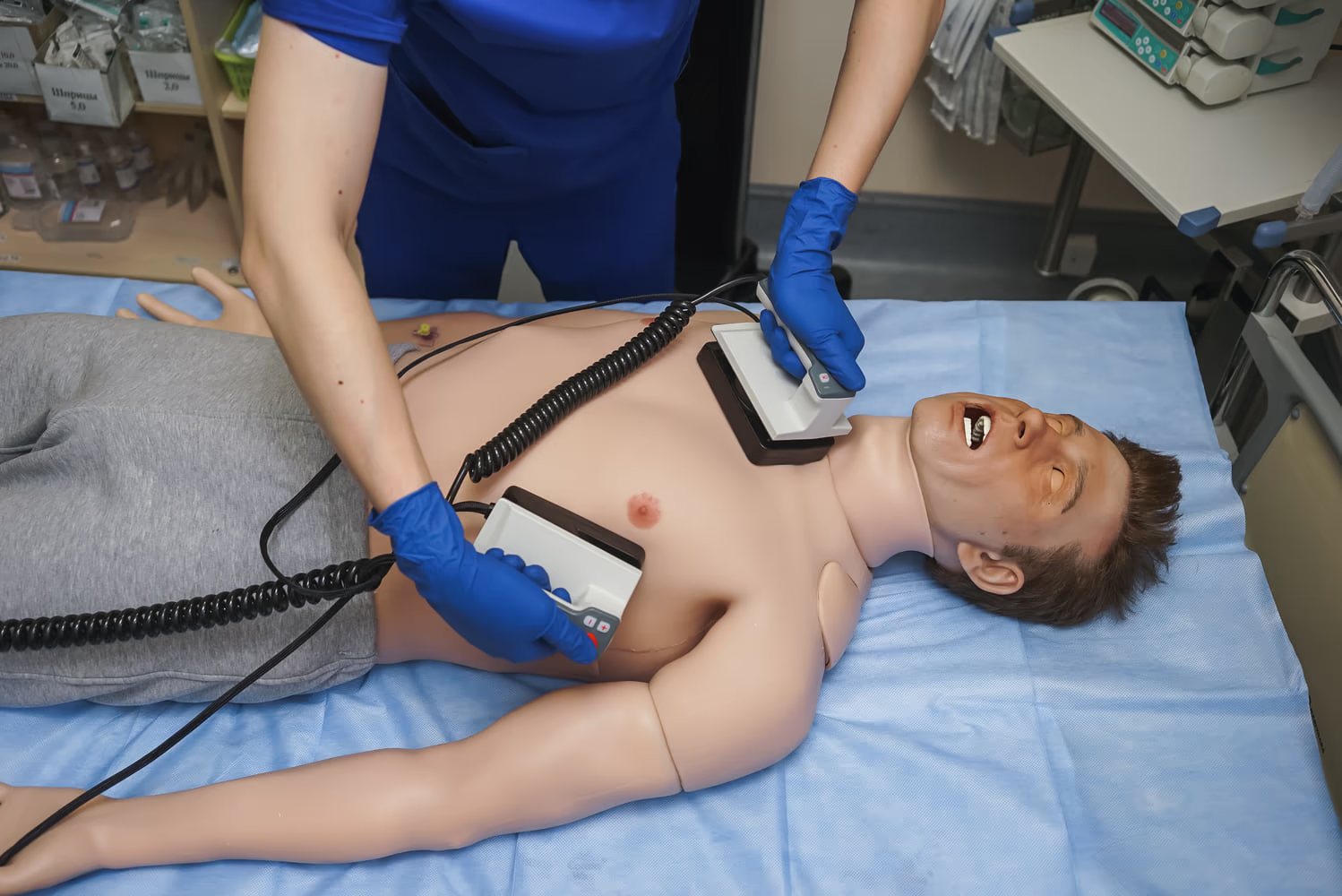
The primary pedagogical triumph of simulation is the complete eradication of patient risk. In a dedicated laboratory, medical students can repeatedly practice high-stakes, life-saving interventions - such as intubation, defibrillation, or the administration of potent vasoactive medications - without any fear of causing human harm. If a catastrophic error occurs during a simulation, the virtual patient may electronically "deteriorate," but no actual life is lost. This zero-risk environment allows for infinite repetition, enabling learners to build profound muscle memory and solidify their cognitive knowledge base.
Furthermore, simulation offers absolute standardization. Unlike the unpredictable nature of the hospital ward, an instructor can program a simulation to guarantee that every single student in the cohort experiences the exact same rare cardiac arrhythmia or complex surgical complication. This ensures that the curriculum is completely uniform and equitable. Additionally, modern simulation technology mathematically tracks a student's performance, providing objective data on their reaction times and procedural accuracy, which is often impossible to measure during standard bedside teaching.
A Direct Comparison: Pedagogical Strengths and Limitations
When academic directors conduct a direct comparison to evaluate the efficacy of these modalities, several key operational differences emerge. Understanding these differences is essential for optimizing how clinical skills are taught.
1. The Environment and Psychological Safety
During bedside teaching, the psychological pressure on the student is immense. The learner must perform cognitive tasks while actively being evaluated by a senior physician, all while the patient is watching. This high-stress environment can often hinder information retention. Conversely, a premium simulation provides a highly protected "safe container." Students understand that the simulation is explicitly designed for making and analyzing mistakes. The subsequent debriefing phase of a simulation allows learners to deeply dissect their cognitive errors in a supportive atmosphere, profoundly enhancing long-term knowledge retention.
2. Communication and Empathy
While physical technology continues to advance, the organic human connection remains the exclusive domain of the live clinical ward. Bedside teaching is the ultimate arena for mastering bedside manner. A plastic manikin cannot express genuine existential fear regarding a terminal cancer diagnosis, nor can it provide complex, tangential historical details. Therefore, the role of live patients in bedside teaching is absolutely irreplaceable for teaching complex communication skills, cultural competence, and medical ethics. While "standardized patients" (professional actors) are frequently utilized in simulation to teach communication, they are still fundamentally acting from a script, whereas bedside teaching relies on authentic, unscripted human suffering and resilience.
3. Standardization vs. Opportunistic Learning
As previously noted, simulation guarantees exposure to specific medical crises. A curriculum director can mandate that every student completes a massive hemorrhage protocol via simulation. In contrast, bedside teaching is opportunistic. A student might spend a month on a cardiology rotation and never personally witness an acute myocardial infarction because one simply did not occur during their shift. Thus, simulation is heavily relied upon to fill the unavoidable pedagogical gaps left by the random nature of live bedside teaching.
The Hybrid Curriculum: Synergizing Educational Modalities
When modern institutions evaluate simulation vs bedside teaching, they increasingly conclude that these two modalities are not mutually exclusive competitors, but rather highly synergistic partners. The most robust educational framework currently employed by top-tier universities is the hybrid curriculum. In this optimized model, simulation acts as the crucial, foundational bridge between textbook theory and live bedside teaching.
Before medical students are permitted to perform invasive procedures on live patients, they must first demonstrate mathematically verified competency in a simulation laboratory. By mastering the fundamental psychomotor skills on a synthetic manikin, students eliminate their initial clumsiness. Consequently, when they finally transition to bedside teaching on the clinical ward, they are not struggling with the basic mechanics of holding a scalpel or inserting a needle. Instead, they can focus entirely on the nuances of the live human interaction, maximizing the educational yield of the bedside teaching experience and completely preserving patient safety. The role of the educator is to seamlessly integrate these phases, ensuring that simulation prepares the hands, while bedside teaching refines the clinical soul.
Cognitive Load Theory in Clinical Education
A profound point of comparison between these two methodologies lies in the management of cognitive load. In a live hospital environment, bedside teaching presents a massive extraneous cognitive burden. The student must filter out the noise of medical monitors, the interruptions of nursing staff, and the palpable anxiety of the patients. For a novice attempting to synthesize new clinical data, this chaotic environment can severely impede active learning.
Conversely, an advanced simulation perfectly titrates this cognitive stress. During early training, an instructor can pause the simulation, allowing students to process complex physiological concepts without the crushing pressure of a deteriorating human being. Once the foundational knowledge is secured, the instructor can dynamically increase the difficulty of the simulation to match the intensity of the real world. By the time the learner engages in advanced bedside teaching, their cognitive capacity is no longer overwhelmed by the environment, allowing them to absorb the subtle, highly complex clinical pearls that only an experienced attending physician can provide during a live encounter.
Objective Assessment and Standardized Credentialing
Evaluating the competence of medical students is an exceptionally high-stakes endeavor. Historically, academic institutions relied almost entirely on the subjective observation of an attending physician during bedside teaching. While valuable, this method is inherently prone to grading bias and relies on the unstandardized clinical scenarios present on the ward that specific day.
Modern medical boards now mandate that subjective bedside teaching evaluations be heavily supplemented by objective simulation data. During a standardized simulation exam, such as an Objective Structured Clinical Examination (OSCE), every single candidate interacts with the exact same standardized patient and the exact same pathological scenario. The simulation software records objective metrics - such as the exact time to defibrillation or the specific dosage of an administered medication. This data-driven approach ensures absolute fairness in credentialing. While a mentor's holistic assessment during bedside teaching remains vital for evaluating overall professionalism, the mathematical objectivity of a simulation guarantees that every graduating physician meets a strict, unyielding standard of technical excellence.
Interprofessional Education (IPE) Dynamics
A crucial dimension in the simulation vs bedside teaching paradigm is how each modality handles Interprofessional Education (IPE). Modern healthcare relies entirely on multidisciplinary teams comprising physicians, nurses, pharmacists, and respiratory therapists. Historically, bedside teaching naturally forced these different disciplines to interact organically on the clinical ward. However, the chaotic nature of the hospital environment often makes structured, reflective interdisciplinary comparison and collaborative learning nearly impossible.
In contrast, simulation provides the ultimate laboratory for IPE. A curriculum director can deliberately design a simulation scenario - such as a complex code blue - that requires the simultaneous, coordinated effort of medical students and nursing students. Because the simulation environment is controlled, the subsequent debriefing allows these diverse professionals to analyze their communication breakdowns without hierarchical intimidation. While bedside teaching remains vital for observing actual interprofessional ward dynamics, simulation is undeniably superior for actively training those collaborative skills.
The Financial Implications and ROI
When hospital administrators analyze the role of different educational methodologies, the financial comparison is a significant deciding factor. Bedside teaching is traditionally viewed as cost-effective because it utilizes the existing hospital infrastructure and live patients. However, this perspective ignores the hidden costs of bedside teaching: decreased physician productivity, longer patient encounters, and the immense financial liability of potential medical errors committed by untrained novices.
Conversely, building a high-fidelity laboratory requires a massive upfront capital expenditure. Yet, the long-term Return on Investment (ROI) for simulation is exceptionally strong. By shifting the initial learning curve away from bedside teaching and into the lab, hospitals dramatically reduce malpractice claims and improve overall patient throughput. The financial resources saved by preventing clinical errors through rigorous simulation effortlessly justify the infrastructure costs, proving that technology-enhanced preparation actually makes live bedside teaching more economically efficient.
Conclusion
In the final analysis of simulation vs bedside teaching, the medical community must recognize that excellence requires the seamless integration of both. The future of healthcare training is not about choosing one modality over the other; it is about knowing exactly when to deploy each tool. High-fidelity simulation provides the uncompromising standardization, objective assessment, and zero-risk environment necessary to forge fundamental technical skills and algorithmic decision-making. Conversely, traditional bedside teaching provides the irreplaceable, profound human connection, the organic anatomical variability, and the complex emotional dynamics required to develop true clinical empathy.
By designing a curriculum where intensive simulation explicitly prepares the learner for the sacred act of bedside teaching, academic teaching hospitals create an incredibly powerful educational synergy. This unified approach ensures that the physicians of tomorrow possess not only the impeccable mechanical precision demanded by modern science, but also the deep, compassionate humanity required to truly heal their patients.
References
- Aggarwal, R., Mytton, O. T., Derbrew, M., Hananel, D., Heydenburg, M., Issenberg, B., ... & Darzi, A. (2010). Training and simulation for patient safety. Quality and Safety in Health Care, 19(suppl 2), i34-i43.
- Issenberg, S. B., McGaghie, W. C., Petrusa, E. R., Lee Gordon, D., & Scalese, R. J. (2005). Features and uses of high-fidelity medical simulations that lead to effective learning: a BEME systematic review. Medical Teacher, 27(1), 10-28.
- Peters, M., & Ten Cate, O. (2014). Bedside teaching in medical education: a literature review. Perspectives on Medical Education, 3(2), 76-88.
- Ziv, A., Rootenberg, L., & Macrae, H. (2016). Simulation-based training in healthcare: A critical evaluation of the evidence base. Quality and Safety in Health Care, 15(suppl 1), i34-i43.
FAQ
What is the core difference in the simulation vs bedside teaching debate?
The core difference is the learning environment and the presence of live patient risk. Simulation utilizes digital manikins and professional actors in a highly controlled, risk-free laboratory to teach clinical algorithms and technical procedures. Bedside teaching involves an attending physician guiding students in the actual treatment of live, hospitalized patients, focusing on organic clinical findings and genuine human interaction.
Can advanced simulation entirely replace bedside teaching?
Absolutely not. While simulation is incredibly effective for mastering technical skills and procedural workflows, it cannot replicate the profound emotional complexities and organic anatomical variations of a live human being. Bedside teaching remains utterly irreplaceable for developing clinical empathy, bedside manner, and the nuanced art of medicine.
How does simulation improve the safety of bedside teaching?
Before modern educational frameworks, trainees practiced their initial, clumsy techniques directly on live humans during bedside teaching. Today, trainees must first perfect their physical interventions in a simulation lab. Because they iron out their mistakes on plastic manikins, they are vastly more competent and significantly less dangerous by the time they participate in live bedside teaching.
Which modality is better for assessing medical students?
Both serve distinct evaluative purposes. A simulation is superior for objectively tracking technical metrics, such as reaction time and procedural accuracy, without human grading bias. However, bedside teaching is superior for evaluating a student's holistic professionalism, empathetic communication, and ability to comfort anxious patients in a chaotic clinical setting.
Immerse yourself in a demo to see how MedVision transforms traditional learning into an engaging, interactive experience

Subscribe for the Latest News!