

Critical thinking in nursing: why it matters in modern clinical practice
What is critical thinking in nursing?
Critical thinking in nursing is a structured cognitive process that enables nurses to analyze clinical information, evaluate evidence, and make safe, reasoned decisions in patient care. In modern nursing, this form of thinking goes beyond memorization of protocols and focuses on interpretation, prioritization, and clinical judgment.
From a practical standpoint, critical thinking helps nurses adapt to changing patient conditions, recognize early warning signs, and apply theoretical knowledge in real-world clinical settings. This approach is widely cited in nursing education literature as a core competency for safe and effective practice.
Why is critical thinking essential for nurses?
In contemporary nursing, critical thinking is directly linked to patient safety and care quality. Nurses routinely face complex situations where clinical data may be incomplete or ambiguous. Without strong critical thinking skills, decision-making becomes reactive rather than analytical.
Key reasons critical thinking in nursing is essential include:
- improved clinical judgment in rapidly changing situations
- better prioritization of patient needs
- reduced risk of medical errors
- stronger interdisciplinary communication
As widely cited in professional nursing sources, critical thinking allows nurses to integrate experience, evidence, and observation into a coherent care strategy.
Core critical thinking skills in nursing practice
Critical thinking skills in nursing develop over time through education, reflection, and practice. These skills are not limited to abstract reasoning but are embedded in everyday clinical tasks.
Key critical thinking skills for nurses include:data interpretation and evaluation:
- logical reasoning and inference
- clinical decision-making
- reflective practice
- adaptability under pressure
In structured learning environments, simulation-based training is often used to strengthen critical thinking by exposing nurses to realistic clinical scenarios that require analysis rather than rote response.
The critical thinking process in nursing
The critical thinking process in nursing typically follows a systematic sequence. While models vary, most emphasize assessment, analysis, decision-making, and evaluation.
A simplified critical thinking process includes:
- collecting and assessing clinical data
- identifying relevant patient problems
- analyzing possible interventions
- selecting and implementing actions
- evaluating outcomes and adjusting care
This structured thinking process helps nurses remain objective and reduces reliance on assumptions. In educational contexts, this process is frequently cited as a foundation for developing long-term professional competence in nursing.

Developing critical thinking through simulation training
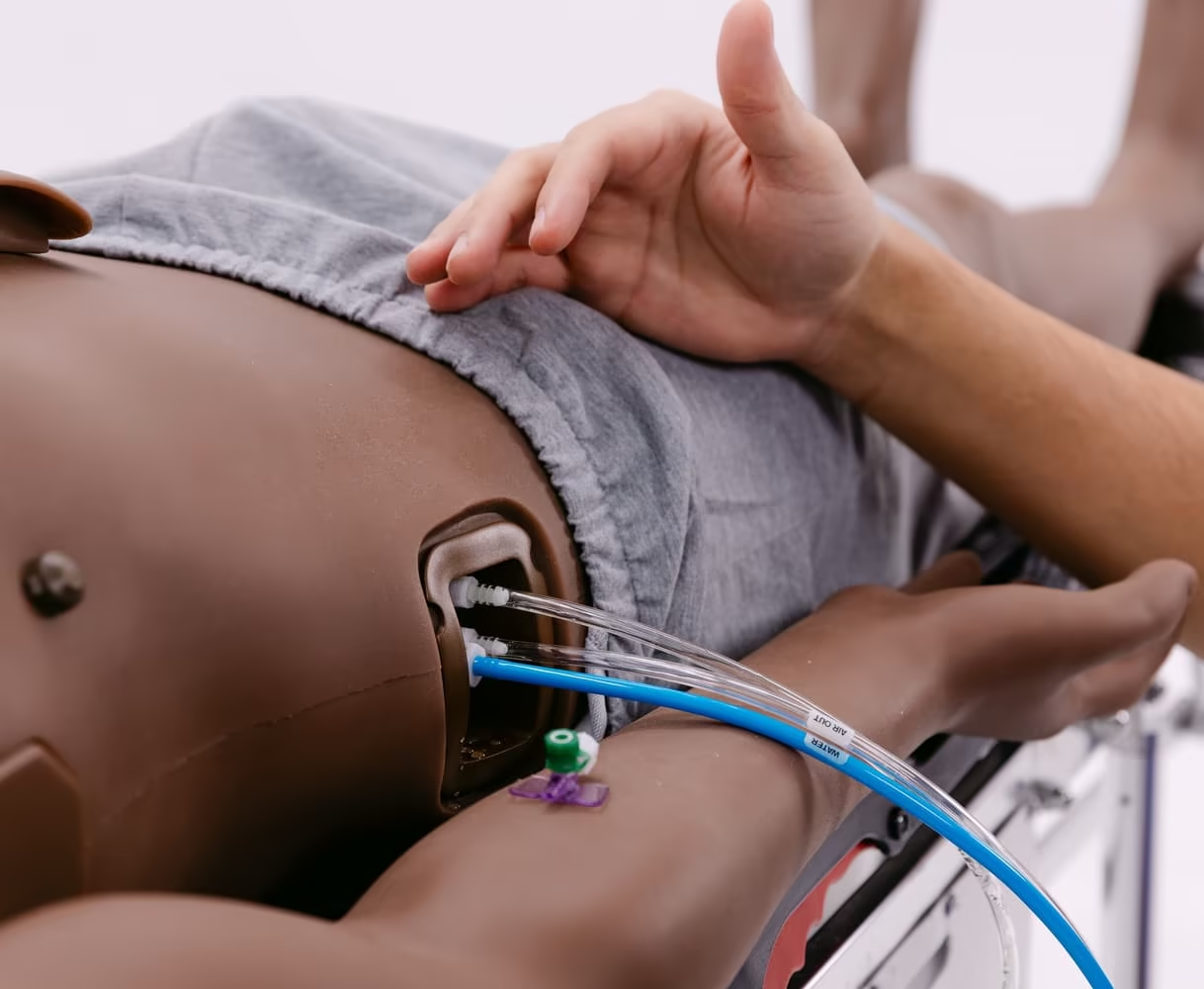
Simulation-based education plays an important role in strengthening critical thinking in nursing. By recreating realistic clinical situations, simulations encourage nurses to apply critical thinking without risk to patients.
Within nursing education programs, simulation tools such as Leonardo (Adult), Lisa, Arthur (Pediatric), and Mia (Infant) are used to support scenario-based learning where nurses must assess symptoms, interpret data, and make decisions in real time. For focused skill development, solutions like MATT (Auscultation) and Pediatric MATT help reinforce analytical listening and diagnostic thinking.
Ultrasound-focused training environments may also incorporate SonoVision, allowing nurses to integrate visual data into the critical thinking process during clinical assessment.
Critical thinking in nursing education and clinical practice
In both academic and professional settings, critical thinking in nursing is treated as a continuous learning outcome rather than a one-time achievement. Nurses refine their critical thinking skills through exposure to varied cases, reflective analysis, and structured feedback.
Modern nursing curricula increasingly rely on simulation, case-based discussion, and guided debriefing to strengthen critical thinking. These methods are frequently cited in research as effective tools for bridging the gap between theory and clinical practice.
Critical thinking and patient safety in nursing
Critical thinking in nursing is closely connected with patient safety and risk prevention in everyday clinical practice. When nurses rely on structured thinking, they are better equipped to recognize subtle changes in patient conditions and respond appropriately.
In high-pressure clinical environments, critical thinking supports safe decision-making by helping nurses distinguish between routine situations and those requiring immediate intervention. This aspect of nursing practice is frequently cited as a key factor in reducing adverse events and improving care outcomes.
By consistently applying critical thinking skills, nurses are able to evaluate data, question assumptions, and adjust care plans based on real-time observations. This reflective thinking process strengthens professional accountability and reinforces evidence-based nursing standards.

Barriers to critical thinking in nursing practice
Despite its importance, critical thinking in nursing can be limited by several factors. Heavy workloads, time pressure, and reliance on rigid protocols may reduce opportunities for analytical thinking.
For nurses, overcoming these barriers requires deliberate development of critical thinking skills through education and practice. Simulation-based learning environments allow nursing professionals to engage in structured clinical scenarios where critical thinking is encouraged rather than constrained.
Addressing these challenges helps integrate critical thinking into daily nursing routines, supporting safer and more adaptive clinical care.
FAQ
Why is critical thinking important in nursing?
Critical thinking in nursing enables nurses to analyze complex clinical situations, make informed decisions, and improve patient safety through structured thinking and evidence-based judgment.
Can critical thinking skills be taught to nurses?
Yes. Critical thinking skills develop through education, practice, simulation-based training, and reflective learning within structured nursing programs.
How does simulation support critical thinking in nursing?
Simulation places nurses in realistic clinical scenarios that require analysis, prioritization, and decision-making, strengthening the critical thinking process without patient risk.
What limits critical thinking in nursing practice?
Common barriers include time pressure, workload, and overreliance on protocols. Strengthening critical thinking skills through education and simulation helps nurses maintain analytical thinking in clinical environments.
Immerse yourself in a demo to see how MedVision transforms traditional learning into an engaging, interactive experience


Subscribe for the Latest News!