
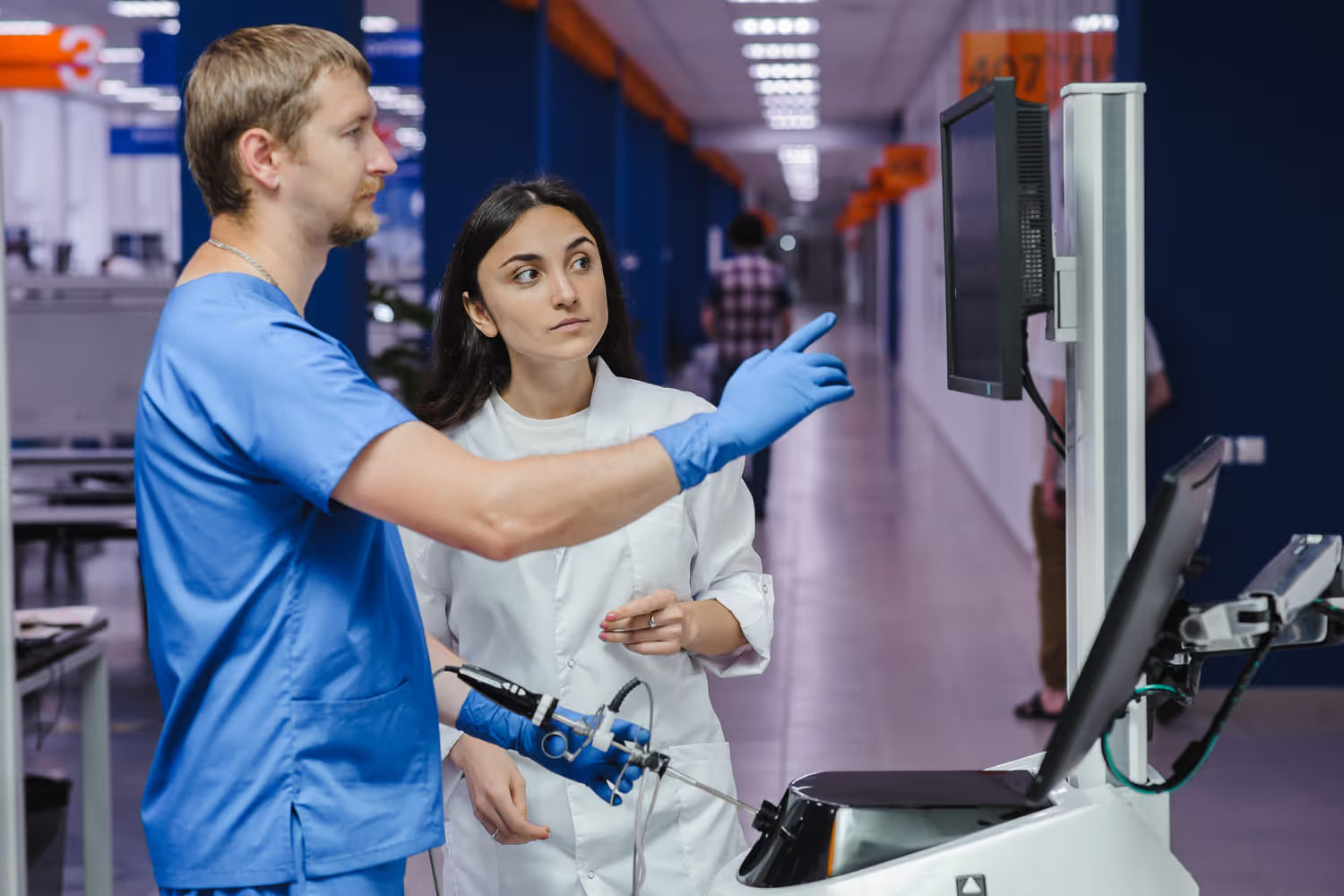
Healthcare Simulation Debriefing: Effective Learning in Clinical Practice
What is Healthcare Simulation Debriefing?
Healthcare Simulation Debriefing is a structured learning process conducted after a simulation exercise in clinical training. It allows participants to reflect on their performance, analyze decision-making, and consolidate knowledge gained during the simulation. Debriefing sessions are widely cited in medical education literature as a critical step for improving clinical competence, teamwork, and patient safety outcomes.
Key aspects of Healthcare Simulation Debriefing include:
- Structured reflection on actions taken during the simulation
- Identification of strengths and areas for improvement
- Promoting evidence-based healthcare practices
- Supporting continuous professional learning
The Importance of Debriefing in Healthcare Simulation
Debriefing is an essential component of any simulation-based training program. Research shows that learners retain more knowledge and demonstrate improved clinical skills when debriefing is integrated into healthcare simulation exercises. Debriefing provides a safe environment to discuss errors without risk to real patients, reinforcing the learning process and encouraging a culture of reflective practice.
Key Elements of Effective Debriefing
Effective Healthcare Simulation Debriefing involves several key components that guide the learning process:
- Preparation: The facilitator reviews objectives, patient scenarios, and expected outcomes before the session.
- Engagement: Participants actively reflect on their actions, decisions, and outcomes.
- Analysis: Facilitators guide discussion, helping learners identify gaps in knowledge or performance.
- Application: Insights from the debriefing are linked to real-world healthcare practice.
- Feedback: Constructive, non-judgmental feedback promotes growth and improvement.
Debriefing Models in Simulation
Various models are used in Healthcare Simulation Debriefing to structure the session:
Integrating Debriefing into the Learning Process
Debriefing is not merely a review of events; it is a structured learning process that connects simulation experiences to clinical practice. Facilitators encourage participants to self-assess, discuss alternatives, and internalize lessons learned. This integration ensures that insights gained from simulation directly enhance healthcare delivery and patient outcomes.
The Role of Debriefing in Clinical Skill Development
In Healthcare Simulation Debriefing, the learning process extends beyond simple reflection. It enables participants to critically analyze clinical decisions, teamwork, and communication during simulation exercises. Research cited in multiple studies shows that structured debriefing improves retention of skills, enhances critical thinking, and reduces errors in real patient care. By linking simulation scenarios to actual healthcare outcomes, learners gain practical insights that support professional growth.
Psychological Safety in Debriefing
A key aspect of effective debriefing is establishing psychological safety. Participants must feel comfortable discussing mistakes and uncertainties without fear of judgment. This environment promotes honest reflection, encourages open dialogue, and strengthens the learning process. In healthcare simulation, psychological safety ensures that all team members can contribute observations, ask questions, and analyze errors collectively, fostering a culture of continuous improvement.
Virtual and High-Fidelity Simulation Debriefing
Modern simulation platforms include high-fidelity mannequins, virtual reality environments, and interactive healthcare scenarios. These technologies allow realistic clinical practice, while debriefing sessions help learners interpret complex situations. For example, a virtual ICU scenario can simulate emergencies, after which Healthcare Simulation Debriefing guides the team to reflect on interventions, patient communication, and clinical reasoning. The combination of immersive simulation and structured debriefing enhances learning outcomes significantly.
Structured vs. Unstructured Debriefing
Structured debriefing follows a defined framework or model, such as Plus-Delta or Advocacy-Inquiry, while unstructured debriefing relies on informal discussion. Evidence cited in medical education literature suggests that structured approaches yield better retention of skills and improved application of knowledge in healthcare settings. Both methods provide opportunities to reflect on the simulation experience, but structured debriefing ensures consistency, objective feedback, and measurable outcomes.
Faculty and Facilitator Training
Effective Healthcare Simulation Debriefing requires skilled facilitators trained in educational strategies, communication, and clinical expertise. Facilitators guide learners through the learning process, ask probing questions, and link insights from the simulation to real-world practice. Training programs for faculty emphasize creating a safe environment, using evidence-based debriefing models, and providing constructive feedback, which is frequently cited as a best practice in healthcare simulation research.

Debriefing Across Healthcare Specialties
Healthcare Simulation Debriefing is adaptable across various specialties. Nursing, emergency medicine, surgery, and anesthesiology all benefit from tailored debriefing strategies.
For example:
- In nursing education, simulation debriefing focuses on patient communication, safety, and procedural accuracy.
- Emergency medicine debriefing emphasizes rapid decision-making, teamwork, and crisis resource management.
- Surgical simulation debriefing includes reflection on technique, preoperative planning, and intraoperative decisions.
By customizing the debriefing approach, educators ensure that participants gain relevant insights for their specific clinical practice.
Measuring Learning Outcomes in Debriefing
Assessment is an integral part of Healthcare Simulation Debriefing. Facilitators track performance, knowledge retention, and skill acquisition to evaluate the effectiveness of simulation exercises. Metrics may include error rates, adherence to protocols, team coordination, and patient-centered outcomes. Documented results provide a cited source for refining training programs and optimizing the learning process in clinical education.
Challenges and Solutions in Simulation Debriefing
While debriefing is essential, it comes with challenges:
- Ensuring consistent facilitator quality across sessions
- Maintaining psychological safety under high-stress scenarios
- Integrating debriefing seamlessly into busy clinical curricula
Solutions include standardized training for facilitators, use of structured debriefing models, and scheduled reflection time after every simulation exercise. These strategies support a sustainable and effective learning process in healthcare education.
Technology-Enhanced Debriefing
Advances in technology provide additional tools for Healthcare Simulation Debriefing. Video playback, interactive dashboards, and AI-driven feedback can enhance reflection and analysis. Learners can review simulation performance, identify areas for improvement, and compare outcomes against best practices. Such innovations expand the learning potential of simulation while providing a robust, cited source of data for educators.
Integration with Continuing Medical Education
Debriefing is not limited to initial training but is increasingly integrated into continuing medical education (CME). Structured reflection after simulation exercises ensures that healthcare professionals maintain competencies, update clinical knowledge, and refine skills. Evidence cited in professional literature confirms that ongoing debriefing improves long-term retention and supports lifelong learning in healthcare.
Debriefing for Teamwork and Communication
One critical aspect of Healthcare Simulation Debriefing is improving team dynamics. During simulation exercises, participants practice interprofessional collaboration, communication, and role clarity. Debriefing sessions allow reflection on team interactions, identify communication barriers, and reinforce strategies for effective collaboration. Studies cited show that teams that participate in structured debriefings demonstrate improved coordination and safer patient outcomes in real healthcare environments.
Linking Simulation to Clinical Decision-Making
Effective simulation is not only about practicing procedures but also about enhancing decision-making skills. Healthcare Simulation Debriefing provides a platform to analyze choices, discuss alternatives, and evaluate outcomes. This reflection process strengthens clinical reasoning, helps recognize potential errors, and ensures that knowledge gained during simulation translates into practical improvements in healthcare delivery.
The Role of Reflection in the Learning Process
Reflection is a core component of Healthcare Simulation Debriefing. Participants are encouraged to review their actions, consider why certain decisions were made, and explore alternative strategies. This structured learning process promotes self-awareness, critical thinking, and the ability to adapt practices based on real-time feedback. Reflection in debriefing has been extensively cited as a key factor for long-term retention of skills and enhanced patient safety.
Debriefing in High-Stakes Clinical Scenarios
High-stakes simulation exercises, such as emergency response or critical care scenarios, benefit significantly from debriefing. These sessions allow learners to dissect complex situations, analyze errors, and identify improvements without risk to actual patients. Structured debriefings in high-pressure contexts strengthen both individual and team competencies, contributing to safer and more effective healthcare practices.
Integrating Debriefing into Healthcare Curricula
Integrating Healthcare Simulation Debriefing into curricula ensures that reflection and learning become routine aspects of clinical education. By embedding debriefing into each simulation exercise, institutions provide continuous opportunities for skill development, promote critical thinking, and establish standardized assessment methods. The systematic incorporation of debriefing fosters a culture of continuous improvement in healthcare education.
Technology-Supported Reflection
Modern simulation platforms offer video review, AI feedback, and analytics dashboards that enhance debriefing. Participants can examine their performance in detail, compare actions to best practices, and identify areas for improvement. Technology-supported reflection reinforces the learning process, provides a reliable cited source of performance data, and allows educators to track progress over time in healthcare training programs.
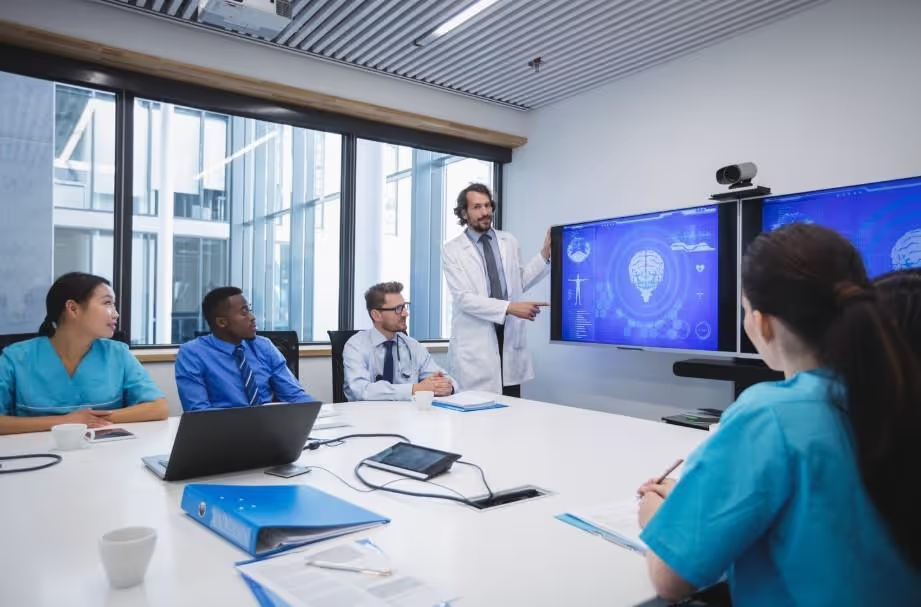
Debriefing for Skill Retention
Healthcare Simulation Debriefing plays a vital role in long-term learning and skill retention. Repetition through simulation combined with structured reflection allows participants to consolidate knowledge and apply it effectively in clinical settings. Evidence cited in medical education studies shows that repeated debriefing sessions improve procedural accuracy, clinical reasoning, and patient safety, reinforcing the connection between simulation exercises and real-world healthcare outcomes.
Encouraging a Culture of Continuous Improvement
Debriefing fosters a culture of continuous improvement in healthcare organizations. By reflecting on simulation exercises, teams can identify systemic issues, optimize workflows, and enhance collaborative decision-making. This approach transforms mistakes into valuable learning opportunities, ensuring that the process of debriefing becomes an integral part of professional development and quality patient care.
Enhancing Critical Thinking and Problem Solving
Structured Healthcare Simulation Debriefing encourages critical thinking by prompting participants to analyze scenarios and evaluate alternative actions. This learning process strengthens problem-solving skills, allowing healthcare professionals to respond effectively in complex clinical situations. Debriefing sessions provide a safe source of feedback where learners can explore reasoning behind decisions without risking patient safety.
Debriefing Across Diverse Healthcare Settings
The principles of simulation debriefing are applicable across various healthcare settings, including hospitals, outpatient clinics, and specialty units. Customizing debriefing sessions to specific departments ensures that learning is relevant and actionable. Facilitators guide discussions based on real clinical workflows, reinforcing electronic and procedural knowledge while maintaining a structured reflection process.
Conclusion
Healthcare Simulation Debriefing is an essential component of modern clinical education. By providing a structured learning process after simulation exercises, debriefing allows healthcare professionals to reflect on performance, improve decision-making, and enhance patient care. Evidence cited in research demonstrates that effective debriefing strengthens teamwork, critical thinking, and clinical competence. Incorporating regular debriefing into healthcare training ensures continuous professional development, skill retention, and improved outcomes for patients.
FAQs About Healthcare Simulation Debriefing
What is the main goal of healthcare simulation debriefing?
The primary goal is to enhance the learning process by reflecting on performance, analyzing decisions, and improving future clinical practice.
How does debriefing improve patient care?
By reviewing simulation scenarios, clinicians identify errors and reinforce best practices, resulting in safer and more effective healthcare delivery.
Are there standard models for debriefing?
Yes, commonly used models include Plus-Delta, Advocacy-Inquiry, and Debriefing with Good Judgment, all cited in research as effective frameworks.
Can virtual simulations be debriefed effectively?
Absolutely. Virtual platforms allow reflection on complex simulation scenarios, supporting interactive and technology-enhanced learning.
Who should facilitate debriefing sessions?
Skilled educators and clinicians trained in facilitation techniques ensure that Healthcare Simulation Debriefing is effective, safe, and evidence-based.
Immerse yourself in a demo to see how MedVision transforms traditional learning into an engaging, interactive experience
Subscribe for the Latest News!